Twin Towers Mahjong
148 boards · free, no download.
148 boards · free, no download.
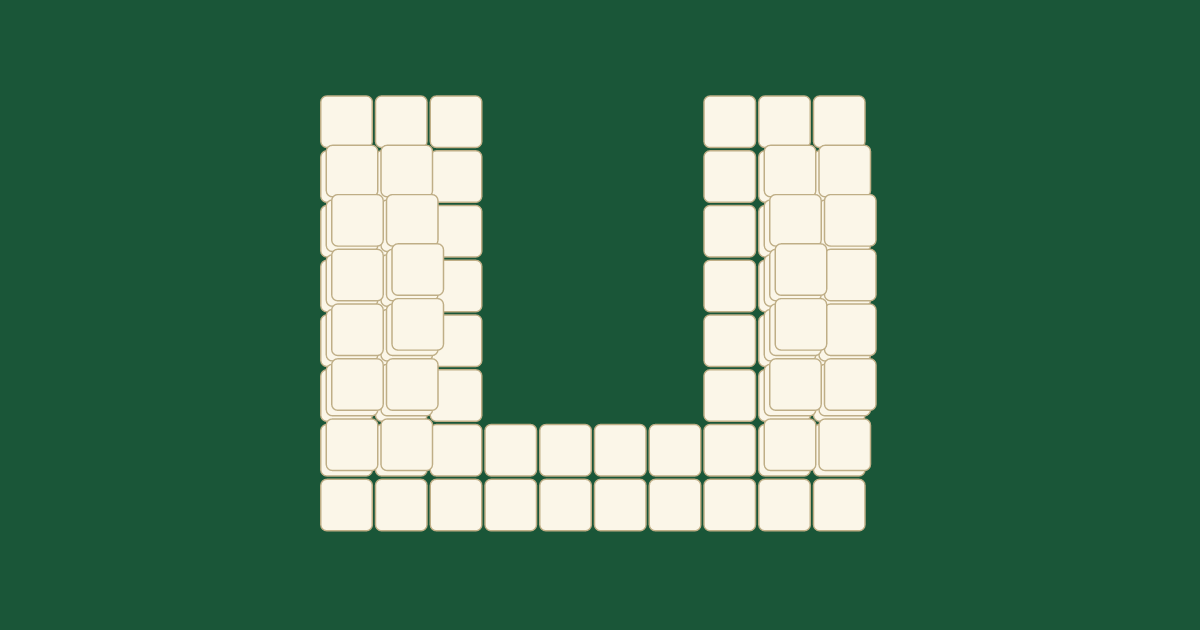
Play Twin Towers Mahjong free online — instant in your browser, no download needed. Twin Towers Mahjong takes the familiar matching game you know and folds it down the middle. Instead of one sprawling pile of tiles, the board is built as two tall, matching stacks that rise side by side with a clear channel of empty space running between them. The two towers mirror each other almost exactly, so the layout has the clean, balanced look of a gateway or a pair of pagodas standing guard. Your job is the same as in any Mahjong Solitaire game: remove all the tiles by clearing identical pairs, where a tile counts as free only when it has no tile directly on top of it and at least one of its left or right edges is open. What changes is the geometry. Because the open space sits in the middle, the inner faces of the towers are reachable across the gap, and the way pairs are scattered between the two structures turns a simple clear into a balancing act.
The appeal of these boards is partly visual and partly tactical. Visually, the symmetry is calming and easy to read at a glance, which makes Twin Towers a comfortable choice for relaxed evening play. Tactically, the split forces you to think about both halves of the board at once. A great many pairs in these layouts are deliberately divided, with one tile sitting in the left tower and its twin in the right, so you can rarely solve one side in isolation. The reward is a steady, satisfying rhythm: as you match across the gap, both towers melt down together, the central channel widens, and previously buried tiles open up on the inner walls. This hub gathers the whole family of these boards, from quick little warm-ups to towering marathons, all of them guaranteed solvable and all of them built around that same mirror-image idea.
Twin Towers is a shape family within Mahjong Solitaire rather than a single fixed board. Every layout in the group shares one defining feature: the 144 tiles are arranged into two distinct raised structures separated by a vertical gap, instead of being spread across a single connected pyramid like the classic Turtle. Picture two rectangular blocks of tiles, each several layers tall, standing a short distance apart with a clean alley between them. From above, the board reads as two columns with a corridor down the center, and that corridor is the heart of how the puzzle plays.
The standard Mahjong Solitaire rules still apply without exception. You clear tiles two at a time by selecting a matching pair. A tile is available to be tapped only if nothing rests on top of it and it has a free edge on the left or the right. Tiles that are boxed in on both sides, or pinned under another tile, stay locked until you peel away whatever is trapping them. The full 144-tile set is used, which means the same suits and honors you expect: the three numbered suits of Circles, Bamboo, and Characters, plus the Winds and Dragons. The Flowers and Seasons are present too, and they follow the usual friendly convention here, where any Flower matches any other Flower and any Season matches any other Season, so you are never stuck hunting for one exact bloom.
What makes the Twin Towers shape special is the role of that central gap. In a single-pile layout, a tile is usually freed by clearing its neighbor within the same structure. In Twin Towers, the inner wall of each tower faces the empty corridor, so those inner tiles often have a permanently open edge from the start. That tends to make the facing inner columns easier to reach, while the outer flanks and the deep interior layers are where the real work hides. Reading the board therefore becomes a question of which faces touch open air and which are buried between the two structures.
The single most important habit in Twin Towers is to advance both towers at roughly the same pace. Because pairs are so frequently split across the two structures, sinking all your effort into one side is the classic way to lose. If you strip the left tower down to its base while the right tower is still nearly full, you will often find that the remaining left-side tiles have no partner left to match, because every available twin is locked deep inside the right tower. Treat the two towers as one connected problem with a shared clock, and keep them shrinking in step.
Lead with the outer edges. The far-left flank of the left tower and the far-right flank of the right tower are your safest opening moves, because those outer columns almost always have an open edge and removing them rarely blocks anything important. Peeling the outer walls inward gradually exposes the tiles behind them without committing you to a risky internal collapse. It is the low-cost way to generate fresh options early, when you have the least information about what is buried.
Match across the gap whenever the chance appears. A pair where one tile sits on the inner face of the left tower and the other sits on the inner face of the right tower is usually the most valuable match available, for two reasons. First, it removes one tile from each structure at once, which is exactly the balanced progress you want. Second, it widens the central corridor, and a wider corridor exposes more inner-wall tiles on the next layer down. Cross-gap matches are the engine that keeps both stacks deflating together.
Think a layer ahead before you commit. Before clearing a pair, glance at what each of those two tiles is currently holding down. Removing a tile that frees two useful tiles beneath it is far better than removing one that frees nothing, or worse, one whose twin is the only thing keeping a future match alive. When you can see four of a kind on the board, prefer to clear the two that unlock the most, and keep the other two in reserve as a safety valve. And when you genuinely run dry, use the Hint and Shuffle tools without guilt. Every board in this collection is guaranteed to have a winning path, and a Shuffle always re-deals the remaining tiles into another solvable arrangement, so a reshuffle is a legitimate reset rather than a dead end.
One of the nicest things about the Twin Towers family is how widely the size scales while the core idea stays intact. The collection spans a broad spectrum of tile counts and tower heights, so you can pick a board that matches the few minutes or the full hour you actually have. The hub pulls together a long list of named variants, including Twin Towers, Marble Twin Towers, Mini Twin Towers, Twin Twin Towers, Sacred Twin Towers, Crimson Twin Towers, Imperial Twin Towers, Celestial Twin Towers, Lunar Twin Towers, Lunar Twin Towers II, Cobalt Twin Towers, Coral Twin Towers, Azure Twin Towers, Celestial Twin Towers II, Cobalt Twin Towers II, and Mystic Twin Towers.
At the gentle end, Mini Twin Towers shrinks the structures down to short, stubby stacks. With fewer layers stacked overhead, far more tiles start out free, the buried interior is shallow, and a full clear takes only a handful of minutes. It is the ideal place to learn the cross-gap rhythm before you scale up, and a good fit for a quick session or a warm-up round. From there the boards grow taller and denser. Standard Twin Towers gives you the full-height pair of stacks that defines the shape, while playful escalations like Twin Twin Towers lean into the theme with a more elaborate, taller arrangement that keeps the same mirror logic but stretches your patience and planning further.
The many themed names you see in the list, the Crimson, Cobalt, Coral, Azure, Lunar, Celestial, Sacred, Imperial, and Mystic variants, are best understood as distinct boards that each put their own spin on the twin-tower silhouette through their proportions and mood. The sequels marked II, such as Lunar Twin Towers II, Celestial Twin Towers II, and Cobalt Twin Towers II, are follow-up layouts in the same vein for players who finished the originals and want a fresh configuration rather than a repeat. Marble Twin Towers leans on a polished, stony presentation that suits the architectural feel of the shape. Across every one of them the promise holds: all 144 tiles, a guaranteed solution, and the same two-stacks-and-a-gap structure you can read at a glance.
The twin-tower silhouette taps into something that recurs across cultures and centuries: paired structures that frame an entrance or stand as matching sentinels. Think of the gate towers of old fortresses, the twin pagodas that flank a temple courtyard, or ceremonial gateways built as a balanced pair. Mahjong itself carries deep roots in Chinese tradition, and arranging the tiles into two mirrored stacks with a path between them gives the board an almost ceremonial, gateway-like presence that fits the game's heritage beautifully. The themed names amplify that feeling. Sacred and Imperial suggest temple and palace, Celestial and Lunar reach for the night sky, and the color names like Crimson, Cobalt, Coral, and Azure simply give each board its own distinct character.
There is a quiet psychological satisfaction baked into the symmetry as well. The human eye loves balance, and a perfectly mirrored board is easy and pleasant to scan, which lowers the mental friction of finding matches. Watching two equal towers come down together, brick by tile, scratches the same itch as demolishing something neatly or tidying two shelves at the same rate. Every cross-gap match feels like progress on both halves at once, and the widening central corridor gives you a constant, visible sense that the board is opening up under your hands.
That mirror structure also subtly shapes the experience of play. Because the two sides echo each other, you start to read them as reflections, anticipating where a twin is likely to sit in the opposite tower. The shape rewards a kind of two-handed, balanced attention that single-pile boards do not demand, and that is a large part of why returning players seek the Twin Towers family out by name. It is not just a different picture; it is a different way of thinking about where your matches live.
On the whole, Twin Towers sits in a friendly-to-moderate band of difficulty, which is a big part of its broad appeal. The open central gap means the inner walls of both structures tend to start with free edges, so you usually have plenty of legal moves available right from the opening, and the board rarely feels claustrophobic the way a tightly interlocked single pyramid can. That generous early flow makes these boards welcoming to newcomers and very comfortable for relaxed, unhurried play, where the pleasure is in the steady rhythm rather than in fighting a brutal puzzle.
The challenge, when it comes, is one of discipline rather than raw complexity. The trap that catches people is uneven progress: clear one tower too far ahead of the other and you can strand its partner with no reachable match. Avoiding that pitfall is a matter of pacing and a little forethought, not of memorizing a tangled structure, which makes the difficulty feel fair and learnable. The taller boards such as standard Twin Towers, Twin Twin Towers, and the themed full-size variants simply give that discipline more room to be tested, with deeper interior layers and more split pairs to keep in balance, while Mini Twin Towers offers a softer landing.
Practically, this family suits a wide circle of players. It is a kind, readable starting point for anyone new to Mahjong Solitaire, thanks to the open layout and the abundant early moves. It is genuinely relaxing for casual and older players who want an absorbing game they can dip into without time pressure, and the symmetry is easy on the eyes. And it still has enough depth to engage seasoned solvers, who can chase efficient, near-perfect clears or work through the larger and II variants for fresh configurations. Whatever your level, the Hint and Shuffle tools are always there as a backstop, and because every board is solvable and every reshuffle stays solvable, you can play to relax with the assurance that a win is always somewhere on the board.
The rules are identical, but the layout is split into two separate stacks of tiles with an open gap running between them, instead of one connected pile. That gap leaves the inner faces of each tower open from the start, and many matching pairs are deliberately divided between the left and right towers. The result is a balancing puzzle: you have to keep both structures shrinking together rather than clearing one and getting stuck on the other.
Advance both towers at the same pace and resist the urge to fully clear one side. Open with the outer edges, the far-left flank of the left tower and the far-right flank of the right, since those are the safest first moves. Then take cross-gap matches whenever you can, because they remove a tile from each tower at once and widen the central corridor, which exposes more tiles underneath. If you do run out of moves, every board here is solvable, so use a Hint, or Shuffle to re-deal the remaining tiles into another winning arrangement.
Mini Twin Towers is the easiest entry point. Its stacks are shorter, so more tiles begin free, the buried interior is shallow, and a full clear takes only a few minutes. It teaches you the cross-gap rhythm and the habit of pacing both towers evenly. Once that feels natural, move up to standard Twin Towers and then the taller themed variants and the II sequels, which keep the same idea but add depth and more split pairs to manage.
Yes. Every layout in this collection, from Mini Twin Towers to the largest themed and II versions, is built so that at least one complete winning path exists. The Shuffle tool also preserves that guarantee: when you reshuffle, the remaining tiles are re-dealt into another arrangement that is still solvable, so a reshuffle is a fair reset, never a dead end. The Flowers and Seasons are matchable within their own groups too, so you are never blocked waiting for one exact tile.
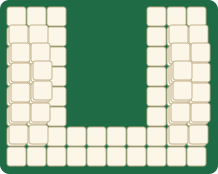
Master · 100 tiles
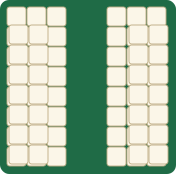
Hard · 76 tiles
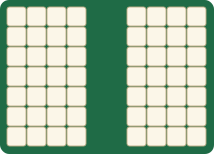
Medium · 56 tiles
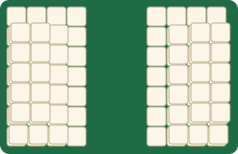
Expert · 112 tiles
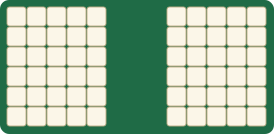
Medium · 60 tiles
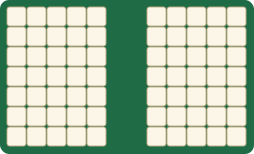
Medium · 70 tiles
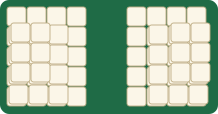
Hard · 76 tiles
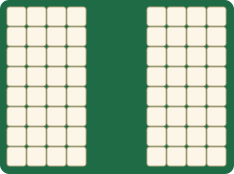
Medium · 64 tiles
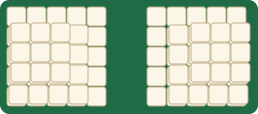
Expert · 100 tiles
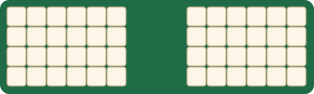
Medium · 48 tiles
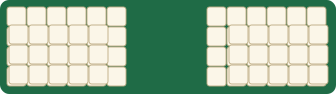
Hard · 78 tiles
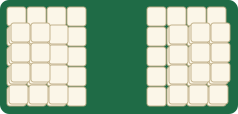
Hard · 76 tiles
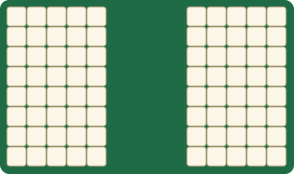
Hard · 80 tiles
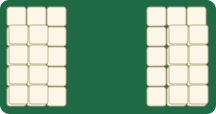
Medium · 46 tiles
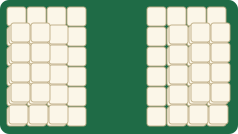
Expert · 94 tiles
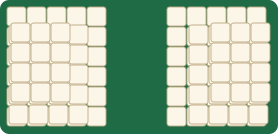
Master · 124 tiles
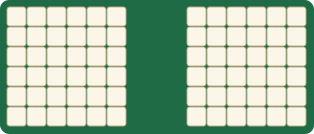
Medium · 72 tiles
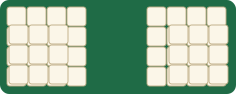
Medium · 50 tiles
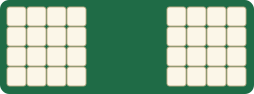
Easy · 32 tiles
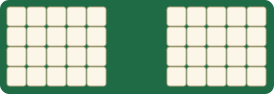
Easy · 40 tiles
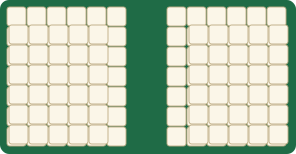
Master · 144 tiles
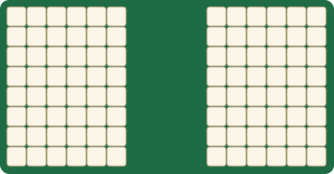
Hard · 96 tiles
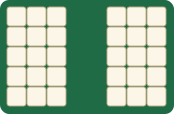
Easy · 30 tiles
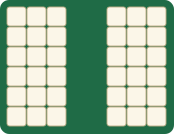
Easy · 36 tiles
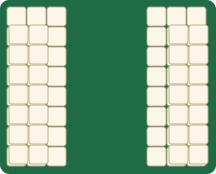
Hard · 76 tiles
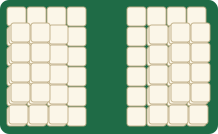
Expert · 94 tiles
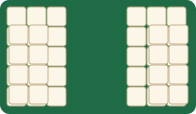
Medium · 46 tiles
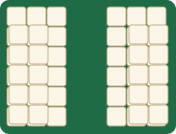
Medium · 56 tiles
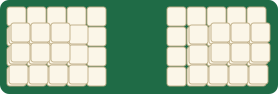
Hard · 76 tiles
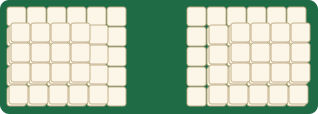
Master · 124 tiles
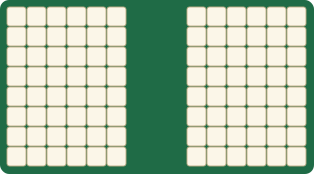
Hard · 96 tiles
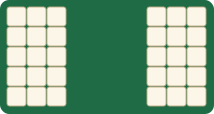
Easy · 30 tiles
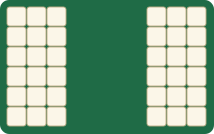
Easy · 36 tiles
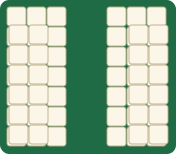
Hard · 66 tiles
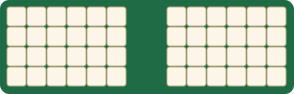
Medium · 48 tiles
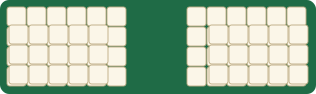
Hard · 78 tiles
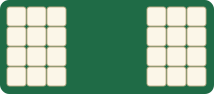
Easy · 24 tiles
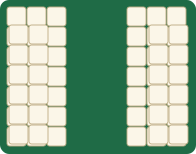
Hard · 66 tiles
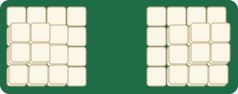
Hard · 58 tiles
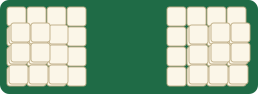
Hard · 58 tiles
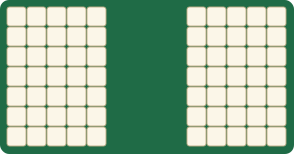
Medium · 70 tiles
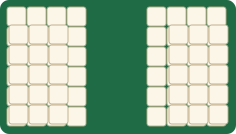
Hard · 78 tiles
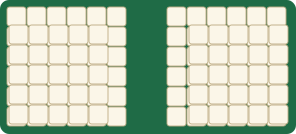
Expert · 122 tiles
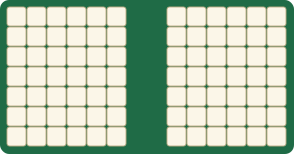
Hard · 84 tiles
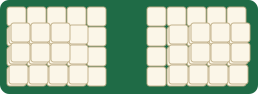
Hard · 76 tiles
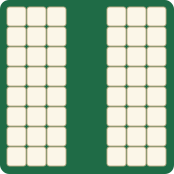
Medium · 48 tiles
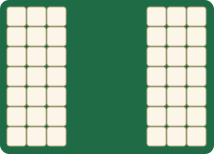
Easy · 42 tiles
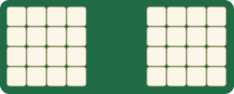
Easy · 32 tiles
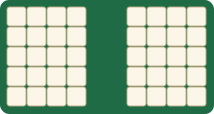
Easy · 40 tiles
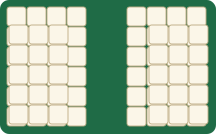
Hard · 78 tiles
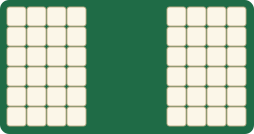
Medium · 48 tiles
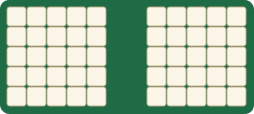
Medium · 50 tiles
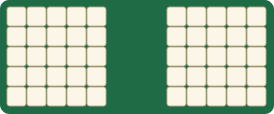
Medium · 50 tiles
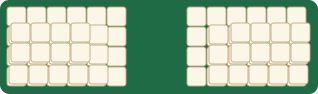
Expert · 94 tiles
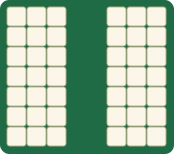
Easy · 42 tiles
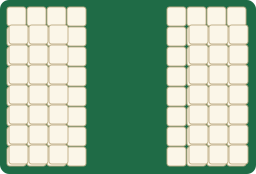
Expert · 106 tiles
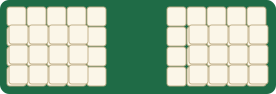
Hard · 64 tiles
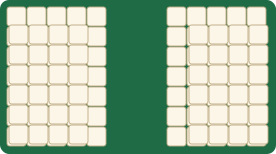
Expert · 118 tiles
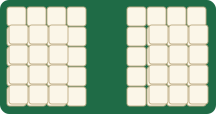
Hard · 64 tiles
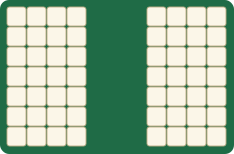
Medium · 56 tiles
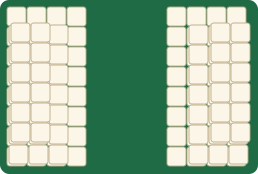
Master · 130 tiles
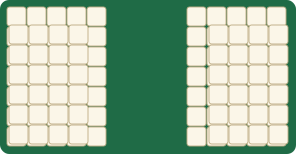
Expert · 118 tiles
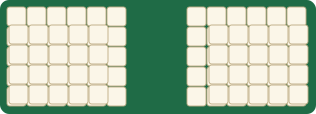
Expert · 100 tiles
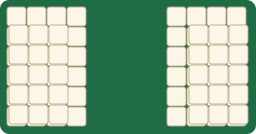
Hard · 78 tiles
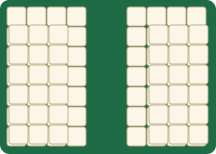
Hard · 92 tiles
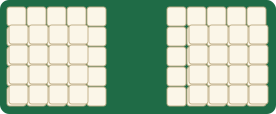
Hard · 82 tiles
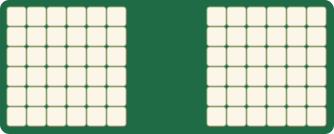
Medium · 72 tiles
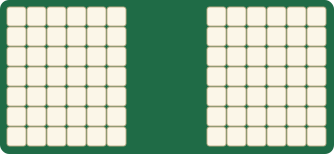
Hard · 84 tiles
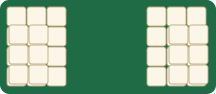
Medium · 36 tiles
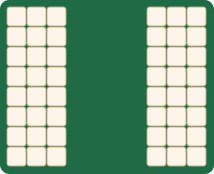
Medium · 48 tiles
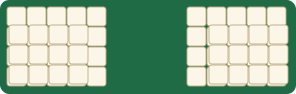
Hard · 64 tiles
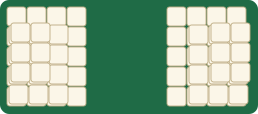
Hard · 76 tiles
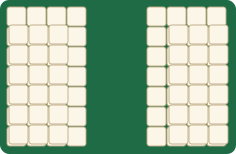
Hard · 92 tiles
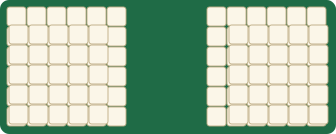
Expert · 122 tiles
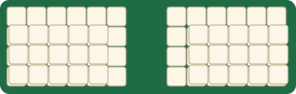
Hard · 78 tiles
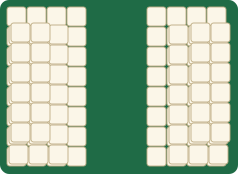
Master · 130 tiles
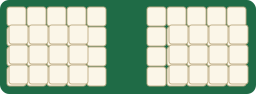
Hard · 64 tiles
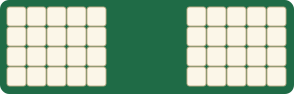
Easy · 40 tiles
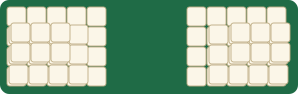
Hard · 76 tiles
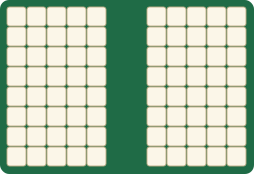
Hard · 80 tiles
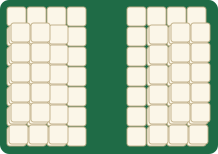
Expert · 112 tiles
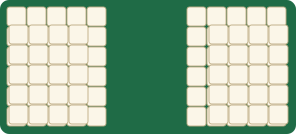
Expert · 100 tiles
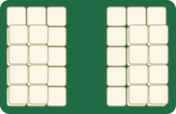
Medium · 46 tiles
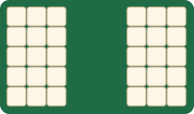
Easy · 30 tiles
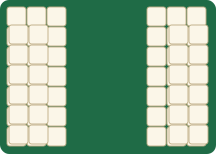
Hard · 66 tiles
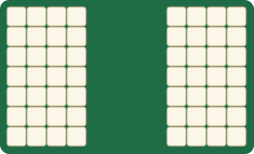
Medium · 56 tiles
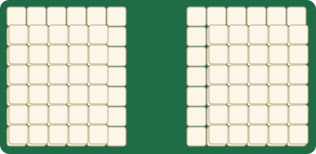
Master · 144 tiles
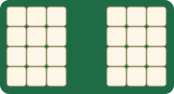
Easy · 24 tiles
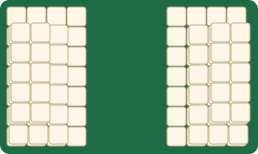
Expert · 112 tiles
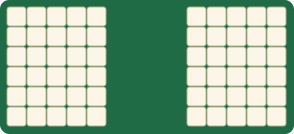
Medium · 60 tiles
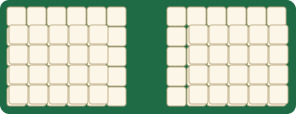
Expert · 100 tiles
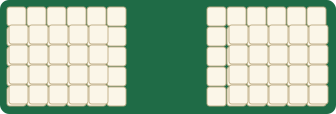
Expert · 100 tiles
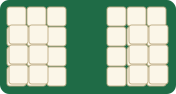
Medium · 36 tiles
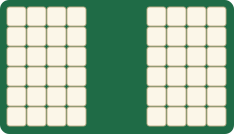
Medium · 48 tiles
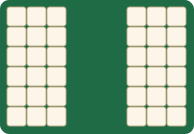
Easy · 36 tiles
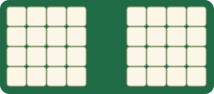
Easy · 32 tiles
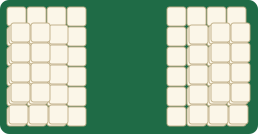
Expert · 94 tiles
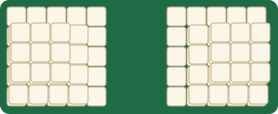
Expert · 100 tiles
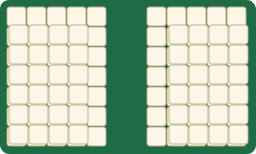
Expert · 118 tiles
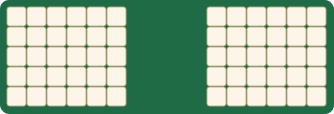
Medium · 60 tiles
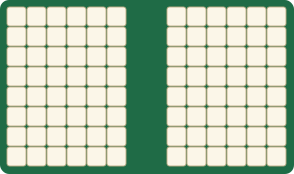
Hard · 96 tiles
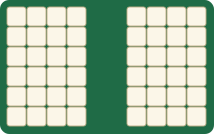
Medium · 48 tiles
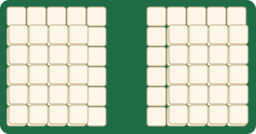
Expert · 100 tiles
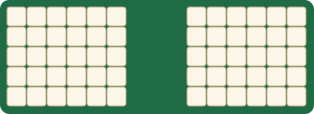
Medium · 60 tiles
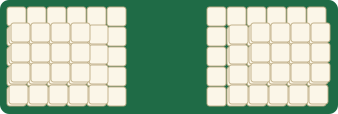
Master · 124 tiles
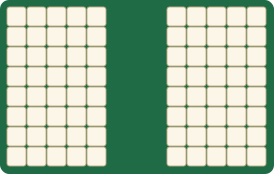
Hard · 80 tiles
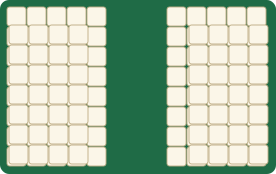
Master · 136 tiles
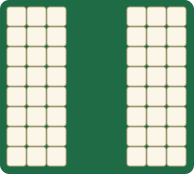
Medium · 48 tiles
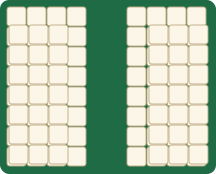
Expert · 106 tiles
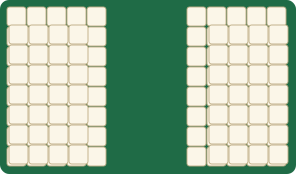
Master · 136 tiles
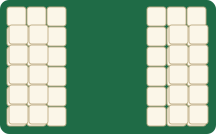
Medium · 56 tiles
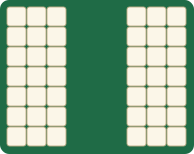
Easy · 42 tiles
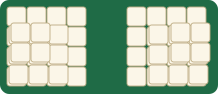
Hard · 58 tiles
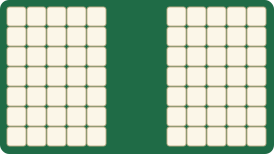
Medium · 70 tiles
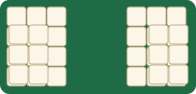
Medium · 36 tiles
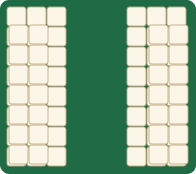
Hard · 76 tiles
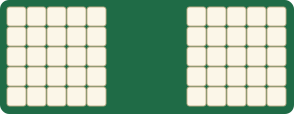
Medium · 50 tiles
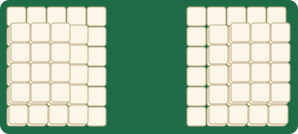
Master · 124 tiles
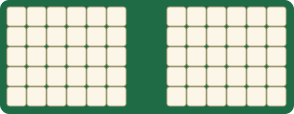
Medium · 60 tiles
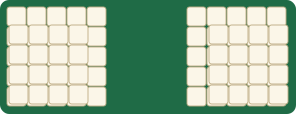
Hard · 82 tiles
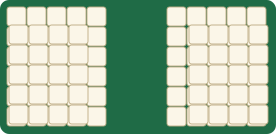
Expert · 100 tiles
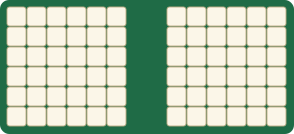
Medium · 72 tiles
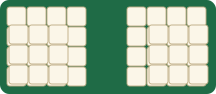
Medium · 50 tiles
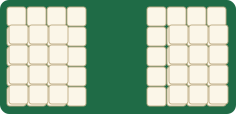
Hard · 64 tiles
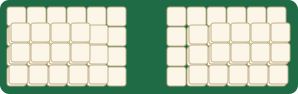
Expert · 94 tiles
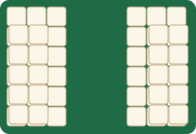
Medium · 56 tiles
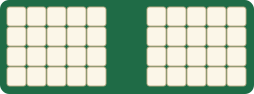
Easy · 40 tiles
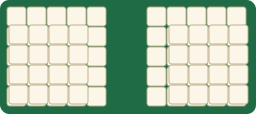
Hard · 82 tiles
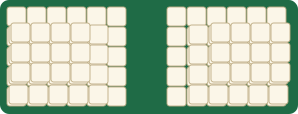
Master · 124 tiles
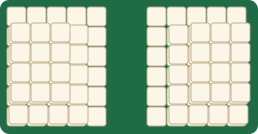
Master · 124 tiles
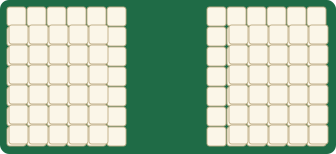
Master · 144 tiles
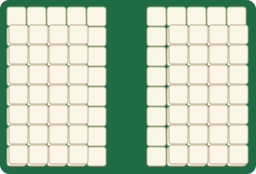
Master · 136 tiles
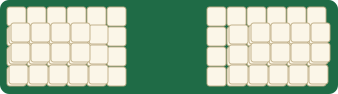
Expert · 94 tiles
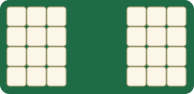
Easy · 24 tiles
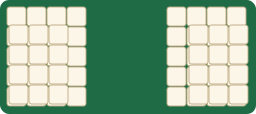
Hard · 64 tiles
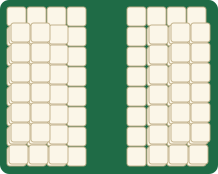
Master · 130 tiles
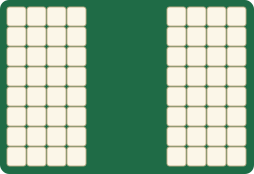
Medium · 64 tiles
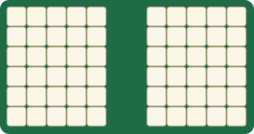
Medium · 60 tiles
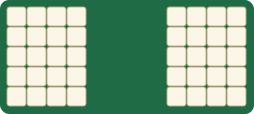
Easy · 40 tiles
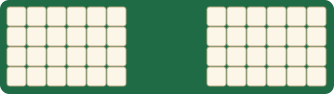
Medium · 48 tiles
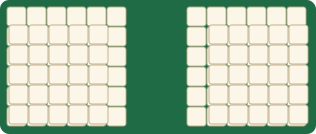
Expert · 122 tiles
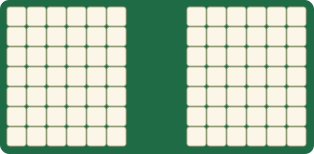
Hard · 84 tiles
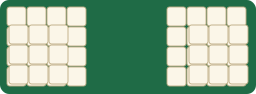
Medium · 50 tiles
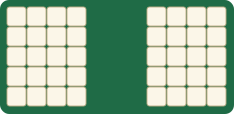
Easy · 40 tiles
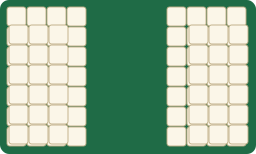
Hard · 92 tiles
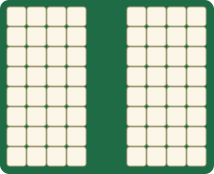
Medium · 64 tiles
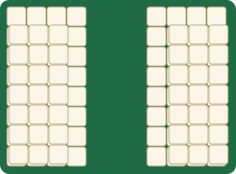
Expert · 106 tiles
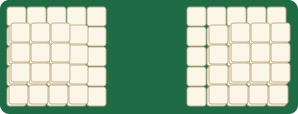
Expert · 100 tiles
Pyramid Mahjong Solitaire · Tower Mahjong · Bridge Mahjong · Cross Mahjong · Diamond Mahjong · Fortress Mahjong · Zodiac Mahjong · Animal Mahjong · Object Mahjong · Food Mahjong · Holiday Mahjong · Symbol Mahjong · Nature Mahjong · Geometric Mahjong · Easy Mahjong Solitaire · Hard Mahjong Solitaire · Christmas Mahjong · Ocean Mahjong
From the same team — more games, free to play online.