Animal Mahjong
29 boards · free, no download.
29 boards · free, no download.
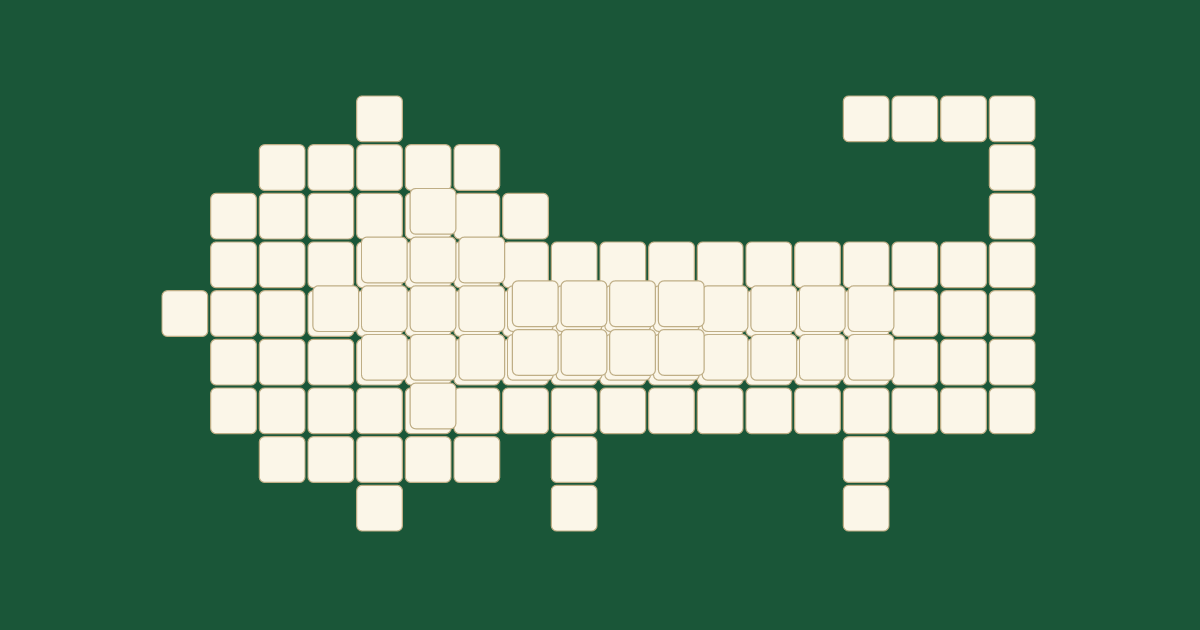
Play Animal Mahjong free online — every board loads instantly in your browser, no download, no sign-up. Animal Mahjong gathers the boards in this collection whose tile layouts are built to look like living creatures. Instead of a neat pyramid or a pair of matching towers, the 144 tiles here are arranged into recognizable silhouettes, a dragon arching across the screen, a butterfly with its wings spread wide, a fish, a snake, an eagle, a cat, a crab, a seahorse and many more. The rules never change from standard Mahjong Solitaire: you clear the board by removing identical tiles two at a time, and a tile can only be taken when nothing sits on top of it and at least one of its left or right edges is open. What changes is the picture those tiles form. Because every animal has its own outline, each board hands you a different starting puzzle of which tiles are free and which are pinned.
The appeal of this corner of the game is that the shape itself tells a small story while you play. A creature board is not an abstract heap, it is a recognizable form that slowly comes apart in your hands, which turns clearing tiles into something closer to dismantling a sculpture than emptying a pile. Variety is the other draw. Where a pyramid hub offers one idea at many sizes, the animal hub offers a whole menagerie, each with a distinct rhythm born from its anatomy, the thin tail of a fox, the broad wings of a swan, the curled body of a scorpion. This page pulls all of those creature-shaped boards together in one place, every one of them guaranteed solvable, so you can pick whichever animal appeals to you and clear it tile by tile.
Animal Mahjong is not a single layout but a theme that ties together many different boards, the common thread being that each one is sculpted to resemble a creature rather than a geometric figure. The full 144-tile set is still used on every board, and it still carries the familiar Mahjong artwork: the three numbered suits of Circles, Bamboo and Characters running one through nine, the four Wind tiles, the three Dragon tiles in red, green and white, and the Flowers and Seasons. None of that changes. The designer simply lays those tiles out so their footprint traces an animal's outline, sometimes flat in a single layer, more often with raised stacks that give the body height and the limbs a thinner, lower profile.
The standard rules apply without exception. You match tiles in identical pairs, and a tile is playable only when it is free, meaning unobstructed on top and open on at least one side so it can slide out. Tiles boxed in on both the left and right, or buried under another tile, stay locked until you peel away whatever traps them. The Flowers and Seasons follow Mahjong's usual relaxed convention here, where any Flower pairs with any other Flower and any Season with any other Season, so you are never hunting for one exact bloom to finish a creature off. On these boards the flowers and seasons are always genuine flowers and seasons, so whenever two of either turn up you can pair them freely.
The reason the animal theme creates such varied puzzles is that anatomy dictates structure. A creature's body is usually the densest, most stacked part of the board, while its extremities, the tails, wings, legs, fins and antennae, are thinner and often only one or two tiles deep. That difference in density is baked into every silhouette, so reading an animal board comes down to recognizing which parts are the lean limbs that free up quickly and which is the heavy core that holds out to the end.
The single most useful instinct on an animal board is to start at the extremities and work inward toward the body. The thin parts of a creature, the tip of a tail, the outer edge of a wing, the end of a leg, are where tiles are shallowest and most likely to have an open edge from the very first move. Clearing those frees up early options without a risky dig into the densest region, and it gradually exposes the joints where a limb meets the body. The dense torso is almost always the final stretch, so treat the limbs as your warm-up and the body as the main event.
Watch closely for pairs split between two limbs of the same creature, the defining tactical wrinkle of animal layouts. Many pairs are deliberately divided so that one tile sits in, say, the left wing of a butterfly and its twin in the right wing, or one is in the tail and the other in a foreleg. Strip one limb bare while ignoring its mirror and you can easily strand a tile whose only partner is locked deep in the limb you neglected. The fix is to advance symmetrical features at a similar pace, peel the two wings together, work the legs in tandem, so split pairs stay reachable on both sides.
Think a layer ahead before you commit to a match. Glance at what each of the two tiles is holding down: a match that frees two useful tiles beneath it beats one that opens nothing, and when you can see four of a kind, clear the two that unlock the most and keep the others in reserve as a safety valve. This matters most around the body, where stacks are tallest and one careless removal can deepen a hole without opening anything you need.
Mind the natural chokepoints in the anatomy. Where a thin limb connects to the bulky body, there is usually a narrow bridge of tiles, the neck of a swan or the base of an eagle's wing, held in place by both the limb and the core at once. These come free only after you have thinned the limb feeding into them, so clear the limb first, then the bridge loosens, then the body becomes reachable.
When you do run out of moves, lean on the Hint and Shuffle tools without hesitation. Every board in this hub is guaranteed to have a complete winning path, so a stuck position means a tile you have not freed yet rather than an impossible board. Shuffle re-deals the tiles you have left into a fresh arrangement that is again guaranteed solvable, so a careless early match never permanently dooms a game.
The defining feature of this hub is breadth of subject rather than breadth of size. Where a single-shape collection scales one idea up and down, the animal hub spreads across an entire bestiary, each creature with its own distinct feel. The boards gathered here include the Dragon, Butterfly, Fish, Snake, Eagle, Cat, Crab, Seahorse, Owl, Sea Turtle, Fox, Swan, Scorpion, Rabbit, Whale, Elephant and more, every one sculpted to read clearly as the animal it depicts.
No two of these play quite the same, because no two animals share the same proportions. The Snake is a long, winding ribbon where the puzzle travels along its length rather than concentrating in one mass, so you work the tail and head toward a thick coil in the middle. The Butterfly, the Swan, the Eagle and the Owl are studies in symmetry, paired wings or a mirrored body that demand you balance the two halves as you clear. The Crab and the Scorpion bristle with thin appendages, claws, legs and a curling tail, giving you many shallow limbs to peel before the central body is exposed. The Whale and the Elephant are dominated by a large solid bulk, so the body is the long final grind, while the Fox, the Cat and the Rabbit lead with slender tails and long ears that free up first.
Because the rules are constant, the general approach, extremities first, symmetrical limbs in step, body last, transfers cleanly from one creature to the next, yet each new silhouette still poses a fresh arrangement of where the hard tiles hide. You are never relearning the game, only re-reading a new animal.
Animals have been part of Mahjong's imagery for as long as the game has existed. The tiles you match carry the green, red and white Dragons among the honors, and in old Chinese tradition the Bamboo suit's lead tile is drawn as a bird or sparrow, a small reminder that creatures are woven into the game's roots. Shaping an entire board into an animal extends that heritage into the layout itself, turning the whole playing field into figurative art made of tiles rather than a purely abstract structure.
There is a real, simple pleasure in clearing a recognizable form. A pyramid is satisfying to dismantle, but an animal adds a layer of charm on top of that, you are not just emptying a board, you are gently taking apart a butterfly or a fish, watching its outline thin and dissolve until the creature is gone. For relaxed play that small narrative quality matters. It gives each session a clear arc, the limbs come away first, the body holds out, and the final pairs feel like the creature's last hold on the screen letting go.
The shapes are also genuinely fun to read because they engage a different kind of attention than geometry does. A square pyramid is predictable at a glance, but an animal's outline is irregular in interesting ways, a tail that juts out here, a wing that flares there, so your eye has to follow the form to understand where the free tiles live. That makes every board feel hand-drawn rather than mass-produced, and the menagerie as a whole offers a different companion for every mood, something playful in a Cat or a Rabbit, something grander in a Dragon or a Whale.
Difficulty across the menagerie varies more by shape than by a single rising scale, because each animal's anatomy decides how forgiving it is. Creatures with many thin, well-separated limbs, like the Crab, the Scorpion or a spread-winged Eagle, start generous, with lots of shallow extremity tiles free from the opening, so you rarely feel boxed in early. Creatures dominated by a single dense mass, like the Whale or the Elephant, are gentler at the edges but ask for more patience through the long body grind at the end. The slim, winding forms such as the Snake or the Seahorse fall in between, asking you to work steadily along a length rather than tear into a heap.
The challenge on these boards is one of discipline rather than brute complexity. The trap that catches people is the same on almost every creature: clearing one limb far ahead of its mirror and stranding a split pair, or digging greedily into the body before the limbs that pin it have been thinned. Both pitfalls are matters of pacing and forethought, not of memorizing a tangled mass, which keeps the difficulty feeling fair. Once you internalize the extremities-first, symmetry-in-step habit, most animal boards open up smoothly, and the harder ones simply give that discipline more room to be tested.
These boards suit a wide circle of players, and they are especially welcoming for relaxed, unhurried sessions. There is no clock and no level you must beat to move on, so you are free to study the creature, take the match that opens the most, and enjoy the teardown at your own pace. Newer players can lean on the guarantees to learn the form: every board can be finished, Hint is there when you want a nudge, and Shuffle always rescues a stuck position. The charm and readability of the shapes make this a kind, easy-on-the-eyes place to settle into Mahjong Solitaire.
At the same time the menagerie has plenty to hold seasoned solvers, who can chase efficient clears or work through the whole bestiary one creature at a time. Because nothing is locked behind progress, a good way to explore is to start with a many-limbed shape like the Cat or the Crab, get comfortable balancing symmetrical features, then move on to the denser bodies of the Whale or Elephant and the winding forms of the Snake or Seahorse as your reading sharpens. You can also just open whichever animal appeals on a given day and play a single satisfying round, with no streak to protect and no penalty for putting it down.
It is a group of Mahjong Solitaire boards whose tile layouts are shaped like creatures rather than like geometric figures such as pyramids or towers. The hub gathers many of them, including the Dragon, Butterfly, Fish, Snake, Eagle, Cat, Crab, Seahorse, Owl, Sea Turtle, Fox, Swan, Scorpion, Rabbit, Whale and Elephant. The rules are exactly the standard ones, you remove identical tiles in pairs until the board is clear, but each animal's outline creates its own pattern of which tiles start free and which are pinned, so every creature plays a little differently.
Begin at the extremities and work inward toward the body. The thin parts of a creature, its tail, wing tips, legs and antennae, are the shallowest and most likely to have an open edge from the first move, so clearing them early opens fresh options without a risky dig into the dense core. Advance symmetrical features like a pair of wings or legs at the same pace so you do not strand a split pair, and save the heavy body for last, since it is usually the most stacked and stubborn part of the shape.
Yes. Every board in this hub is generated so that at least one complete winning sequence exists, clearing all 72 pairs from the limbs through to the body. If a game feels stuck, the remaining path depends on a tile you have not freed yet rather than being impossible, so re-reading the creature usually reveals the move you missed. If you genuinely run dry, the Shuffle tool re-deals the tiles you have left into another arrangement that is again guaranteed winnable, so a reshuffle is a fair reset rather than a dead end.
They use Mahjong's standard relaxed rule. Any Flower tile pairs with any other Flower, and any Season tile pairs with any other Season, so you never need an exact duplicate to remove them. On every animal board the flowers and seasons are real flowers and seasons, which makes them handy for clearing wild matches that might otherwise block a part of the creature, and it means you are never left waiting on one specific tile to finish a board off.
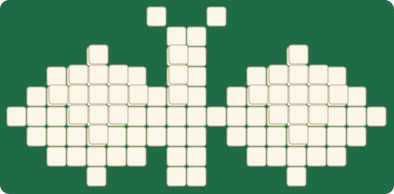
Hard · 116 tiles
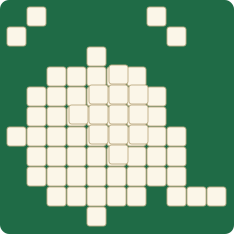
Medium · 70 tiles
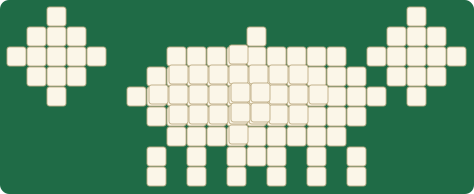
Hard · 122 tiles
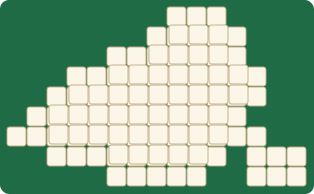
Hard · 126 tiles
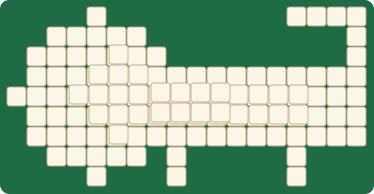
Expert · 134 tiles
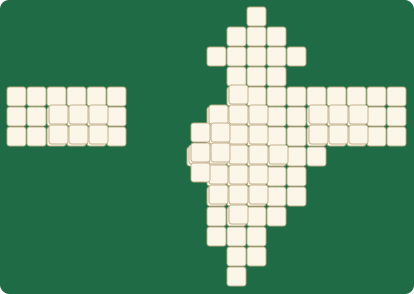
Expert · 122 tiles
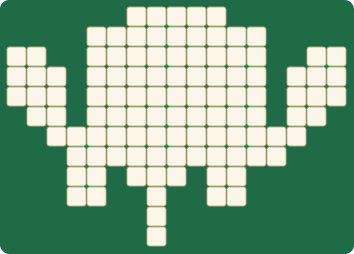
Expert · 108 tiles
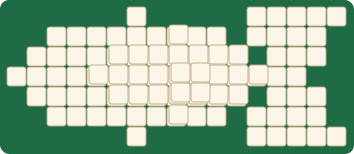
Medium · 110 tiles
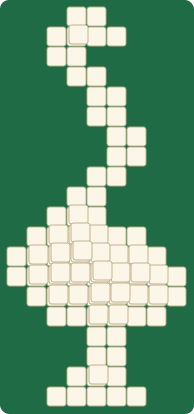
Expert · 114 tiles
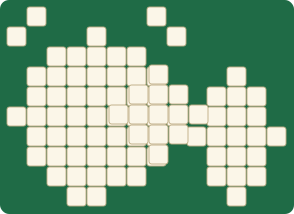
Hard · 86 tiles
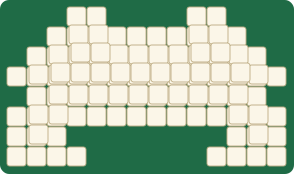
Medium · 136 tiles
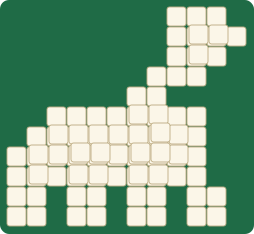
Hard · 98 tiles
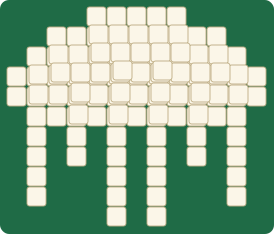
Hard · 144 tiles
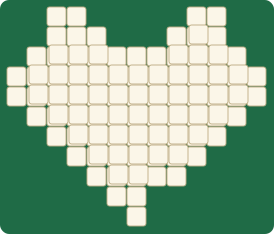
Hard · 134 tiles
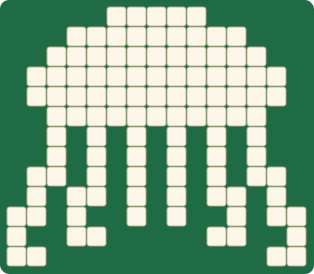
Expert · 108 tiles
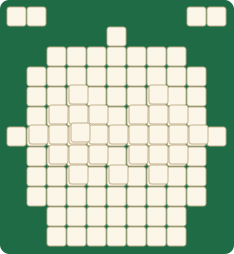
Hard · 118 tiles
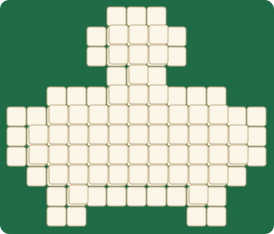
Medium · 140 tiles
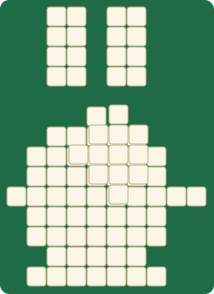
Medium · 84 tiles
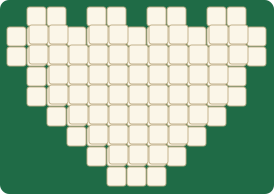
Medium · 132 tiles
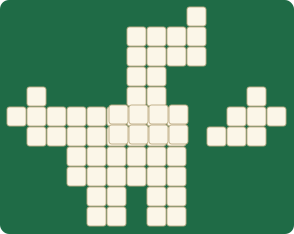
Expert · 66 tiles
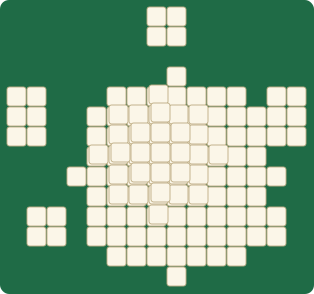
Hard · 144 tiles
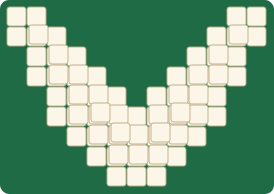
Medium · 86 tiles
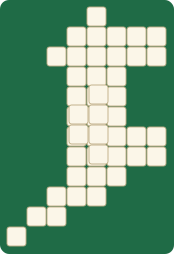
Hard · 46 tiles
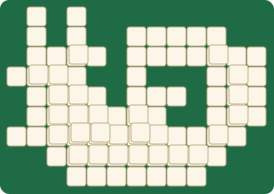
Medium · 106 tiles
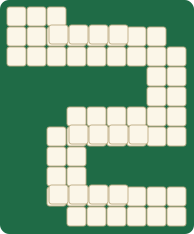
Hard · 66 tiles
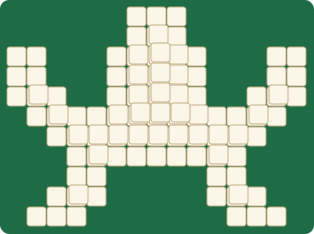
Medium · 122 tiles
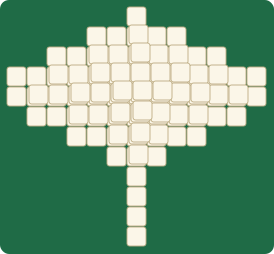
Medium · 124 tiles
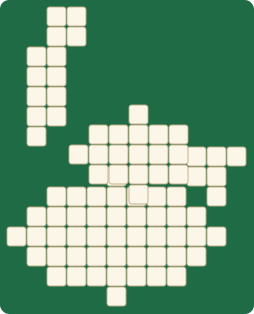
Hard · 82 tiles
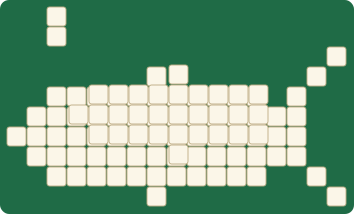
Hard · 104 tiles
Pyramid Mahjong Solitaire · Tower Mahjong · Twin Towers Mahjong · Bridge Mahjong · Cross Mahjong · Diamond Mahjong · Fortress Mahjong · Zodiac Mahjong · Object Mahjong · Food Mahjong · Holiday Mahjong · Symbol Mahjong · Nature Mahjong · Geometric Mahjong · Easy Mahjong Solitaire · Hard Mahjong Solitaire · Christmas Mahjong · Ocean Mahjong
From the same team — more games, free to play online.