Symbol Mahjong
21 boards · free, no download.
21 boards · free, no download.
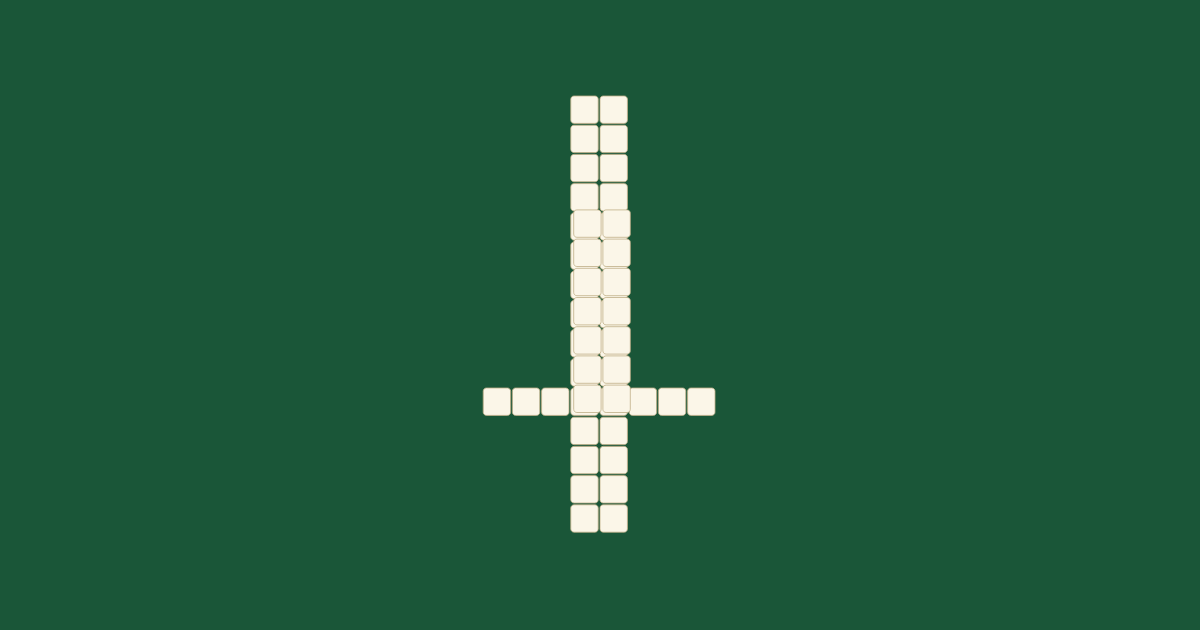
Play Symbol Mahjong free online — instant in your browser, nothing to download. Symbol Mahjong is the part of Mahjong Solitaire where the tiles forget about turtles and pyramids and instead spell out a sign you already know by heart. Each board is stacked into the outline of a single graphic mark: a peace sign, a music note, a spade, a question mark, a skull, a shamrock. These are the shapes the world uses as shorthand, the kind printed on flags, buttons, road markers, and playing cards, and seeing one built out of mahjong tiles is oddly delightful. There is no scene to interpret; the board is one bold glyph, drawn in tiles, and your job is to take it apart pair by pair until the sign is gone, following the same standard rules you already play: remove matching pairs of free tiles until the board is clear.
What gives this category its own flavor is that symbols are rarely solid blocks. A real sign is mostly line and edge, so these boards tend to come in two parts: an outline you read in an instant, like the ring of a peace sign, and the interior strokes that give the symbol its meaning, like the Y inside it. That construction is the heart of how these boards play, and it is why they look so clean on a screen, with plenty of negative space and crisp strokes that your eye locks onto before your hand has even moved. Every board in this hub is guaranteed solvable from the deal, so the only thing between you and a cleared symbol is the order in which you choose your pairs.
Mahjong Solitaire is a matching game played on a three-dimensional stack of tiles. You win by removing every tile in matching pairs, and a tile can only be taken when it is free, meaning nothing is resting on top of it and at least one of its left or right long edges is open so you can slide it out. The shape of the board is just how those tiles are arranged, and in this hub the arrangement traces a recognizable symbol. Flowers all match one another and seasons all match one another, exactly as in the classic game; the only thing that changes from a standard turtle is the silhouette your tiles are poured into.
The trait that defines a symbol board is that it is built from strokes rather than from a filled body. Most signs are line art, so when a designer renders one in tiles the natural result is a thin, often hollow figure: an outline one or two tiles wide, sometimes with separate interior strokes floating inside or across it. Unlike an object board such as a vase or a bell, where a solid belly of tiles is stacked several layers deep, a symbol is mostly perimeter, so it feels airier and hands you more free tiles around its edges from the very first move.
Because the figure is hollow or split, a symbol board often presents several independent runs of tiles at once. The stroke and dot of an exclamation mark are separate pieces, and the four bars of a hashtag only touch where they cross. So your accessible frontier is not one continuous rim but a scattering of stroke-ends all over the board, and seeing those stroke-ends as your starting points is the whole skill of the category.
The guiding rule is the one the shapes hand you for free: clear the outline first, then the interior strokes. On most symbol boards the outer ring or frame is a single tile deep and largely free along its length, so peeling it is fast and low-risk and thins the figure down to its skeleton. Once the outline is gone, the interior strokes that were partly tucked beneath it open up, and you finish by clearing those. Following the symbol's natural drawing order is almost always the right way to dismantle it.
Treat every stroke-end as an entry point and work the strokes from their tips inward. The tip of a sword blade, the bottom of an exclamation mark, the point of a spade, the end of each hashtag bar, and the outer dot of a question mark are all free on the opening move, because the board edge leaves one side open and nothing sits beyond a tip. Spreading early matches across many stroke-ends keeps the whole figure deflating evenly, which matters because the place where strokes meet is where the trouble hides. The crossing of a hashtag, the junction of an ankh, and the spot where a skull's jaw meets its dome are where tiles stack highest and lock one another in place. Reach those crossings last, once the limbs feeding them are clear, and they come apart cleanly instead of jamming.
As always in Mahjong Solitaire, mind your duplicates before you commit. Most tile faces appear four times, so when two free copies sit on a pair of stroke-ends, ask whether taking them now strands the other two somewhere deeper in the figure. A common symbol trap is matching greedily along one easy stroke while the tiles you need to break open a crossing get quietly buried. When in doubt, prefer the match that uncovers the most tiles underneath, and keep a flexible pair in reserve for when a junction finally opens. If a position runs dry with tiles still on the board, that is what Shuffle is for: it re-deals the remaining tiles into a fresh arrangement that is also guaranteed solvable. These boards reward unhurried reading far more than speed.
No two glyphs here play quite alike. Among the pointed weapons and tools, the Sword is a long, mostly single-file blade with a crossguard and pommel near the hilt, so you run the blade from the tip down and finish at the denser handle. The Trident joins three prongs to a shaft, a small forest of stroke-ends up top feeding into one busier junction. The Magnifying Glass pairs a hollow round lens, an outline you peel before anything inside it, with a straight handle that empties quickly. The Compass Rose is a star of points radiating from a center: clear the tips inward and save the dense middle for last.
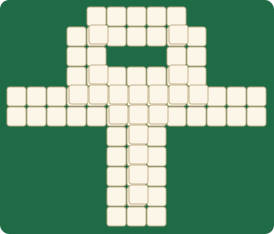
The sign-and-punctuation boards lean hardest into the hollow, split character of the category. The Peace Sign is a ring enclosing an upside-down Y, a textbook outline-then-interior board. The Question Mark sets a curved hook above a detached dot, the dot an easy free pair and the hook unwinding from its open end. The Exclamation Mark is even more split, a tall stroke over a separate dot, about as gentle an opener as this hub offers. The Hashtag is four crossing bars over open air, with every bar-end free at once and only the four crossing points to untie. The Ankh and the Shamrock both stack rounded loops onto a stem, the ankh a single loop above a cross and the shamrock three leaves on a slender stalk, so on both you open the loops and come down the stem.
Then there are the playing-card and figure symbols, which carry a little more body. The Spade is a rounded leaf tapering to a point with a small stem foot, and the Club is its three-lobed cousin, both read from the outline inward to the stem. The Eighth Note draws a filled head with a flag off its stem, a compact lower mass with a thin tail you peel early. The Skull is the densest of the bunch, a rounded cranium over the dark sockets and a jaw, so you work the dome and jaw edges before the tighter face. The Squid is the playful outlier, a domed mantle trailing a bundle of wiggly arms that come apart in pairs before you clear the body. The Shield rounds things out, a broad heraldic outline tapering to a point that behaves most like a classic frame: clear the border, then work down to the tip.
Humans have been compressing whole ideas into single marks for as long as we have made marks at all, which gives this category a deep well to draw from. An ankh, a trident, a skull, a spade each carry a story far older than any tile game: the ankh stood for life in ancient Egypt, the trident belonged to sea gods and storms, the spade and club came down through centuries of playing cards, and the peace sign was understood everywhere within a few years of being drawn. Building these out of mahjong tiles puts a small piece of that history on the table. You are not just clearing an abstract mound, you are taking apart a sign that means something, and that gives even a quick session a little spark of recognition.
Visually, symbol boards are some of the cleanest in the whole game, and that is a genuine part of their appeal. The generous empty table around every stroke lets the shape breathe and makes the tile faces easy to read against the negative space. A question mark hanging in open air, a hashtag floating with daylight between its bars, a peace sign with a clear circle of nothing inside its ring, these simply look graphic and inviting in a way a dense block never does, which is part of why players who pick a board by how pleasant it is to look at keep landing on the symbols.
The split construction also keeps the classic game from going stale. Once you have cleared a hundred turtles the geometry stops surprising you, but a glyph forces your eye to relearn the board every time, because the loose tiles and the choke points sit wherever the strokes happen to fall. The underlying skill carries straight over, yet the picture is brand new each session, so a familiar game stays interesting far longer than it has any right to. And there is the small satisfaction of the arc: the outline goes, the interior strokes follow, the crossing finally comes undone, and the sign you recognized at a glance is gone from the table.
As a category, Symbol Mahjong sits in the easy-to-moderate range, and the hollow construction is the reason. Because so much of each figure is single-depth outline and detached strokes, there is rarely a wall of locked tiles to chew through; the opening hands you free tiles at stroke-ends all over the board, and the natural outline-first order means the first several moves more or less suggest themselves. That makes the symbols a welcoming home for relaxed and older players, for a coffee break, or for easing back into the game after time away.
Within that friendly band the boards still vary, and the variation is worth seeking out. The most split, most open shapes are the gentlest: the Exclamation Mark, the Question Mark, the Hashtag, and the Compass Rose are mostly separate strokes with only a few crossings, so they play quickly and forgive a loose move. The more enclosed or layered figures ask a bit more sequencing care: the Skull stacks the tightest, and the Ankh, the Spade, and the Club concentrate tiles where their loops and stems meet the body, so a careless early match there can strand a pair you needed. Choosing a punctuation mark over a skull is a quiet way to dial the challenge up or down.
Newcomers should start on an Exclamation Mark, a Question Mark, or a Peace Sign to learn the outline-then-interior instinct, then step up to a Spade, an Ankh, or finally the Skull once the habit sticks. Players who normally chase the hardest fortress and dragon layouts will still enjoy these as palate cleansers, and can invent their own challenge by playing for speed. Whoever you are, the safety net never changes: every board is solvable from the deal, Shuffle re-deals into another solvable arrangement, the flowers and seasons are grouped so their matches are always fair, and Undo and Hint wait whenever you want them. The promise of this hub is simple, that you can always finish the sign, so you are free to relax and enjoy reading it apart stroke by stroke.
Start at the stroke-ends and clear the outline first. The tip of a sword, the bottom of an exclamation mark, the end of each hashtag bar, and the points of a compass rose are all free on the opening move, because the board edge leaves one side open and nothing sits beyond a stroke-end. Peel the outer ring or frame and those exposed tips early, since they are mostly a single tile deep and rarely trap anything beneath them. Save the interior strokes and the spots where strokes cross for last, once the outline that covered them is gone.
Because symbols are drawn as lines and edges rather than as solid bodies, so the tiles naturally fall along thin strokes with open table between them: a peace sign is a ring around empty space, a hashtag is four bars with daylight between them. That is by design and part of the appeal. The figures read instantly, the tile faces stand out against the negative space, and you get free tiles at many stroke-ends from the first move instead of chipping into one dense block.
The most split, most open figures are the gentlest. The Exclamation Mark, the Question Mark, the Hashtag, and the Compass Rose are mostly separate strokes with only a few crossing points, so they play quickly and forgive a loose move. The more enclosed or layered shapes ask for more careful sequencing: the Skull stacks the tightest, and boards like the Ankh, the Spade, and the Club concentrate tiles where their loops and stems join the body. Start on a punctuation mark, then work up toward the skull as your tile-reading sharpens.
They are built-in tools, not cheats. Shuffle takes the tiles still on the board and re-deals them into a brand new arrangement that is always solvable, so it is the right move when a position dries up or you suspect an early mistake locked the figure. Undo steps back your last move when you want to replan a line, and Hint points out a legal matching pair when you only need a nudge. Using them less often makes a nice personal challenge, but there is no penalty: since every board is solvable from the deal, you are never beaten by a bad layout, only by a tile order you can rethink.
Hard · 82 tiles
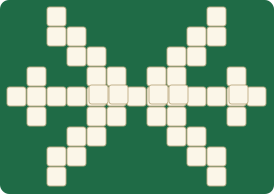
Medium · 50 tiles
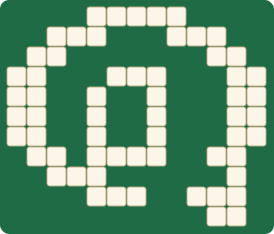
Hard · 60 tiles
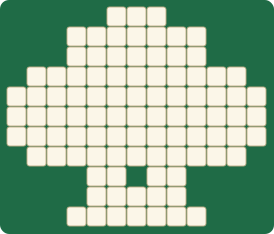
Medium · 94 tiles
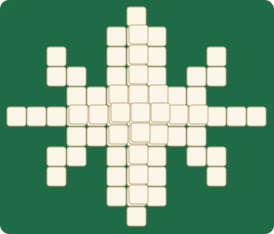
Hard · 82 tiles
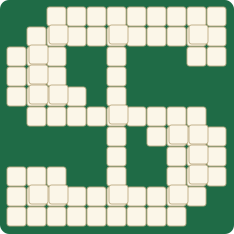
Medium · 94 tiles
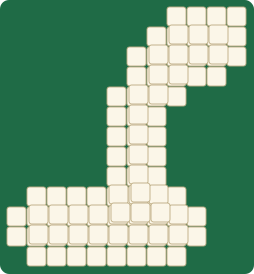
Medium · 110 tiles
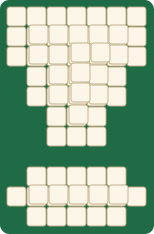
Medium · 80 tiles
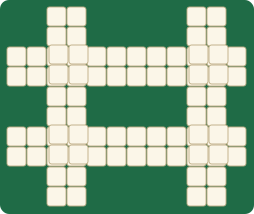
Hard · 88 tiles
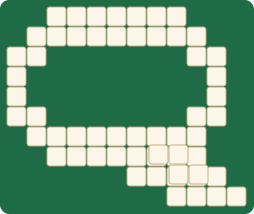
Medium · 58 tiles
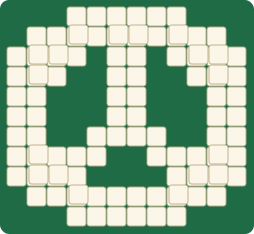
Medium · 106 tiles
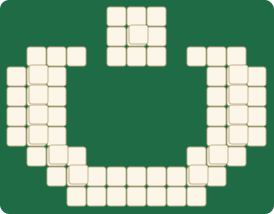
Medium · 74 tiles
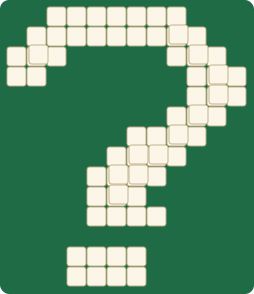
Medium · 72 tiles
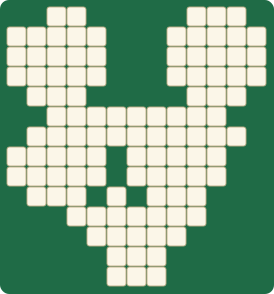
Medium · 106 tiles
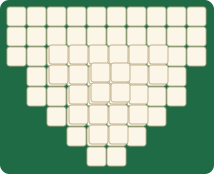
Expert · 84 tiles
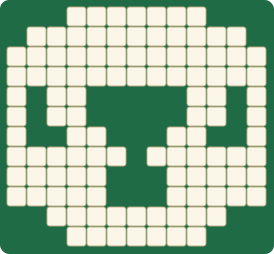
Hard · 110 tiles
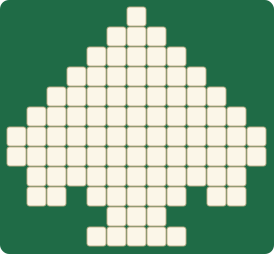
Medium · 90 tiles
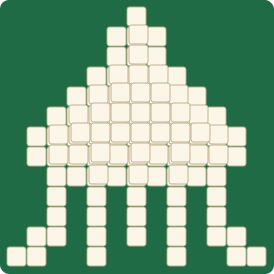
Hard · 138 tiles
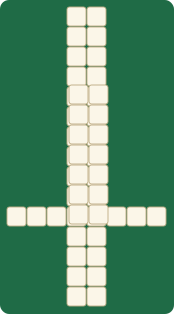
Medium · 50 tiles
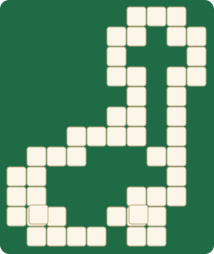
Expert · 50 tiles
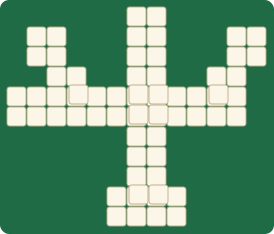
Hard · 66 tiles
Pyramid Mahjong Solitaire · Tower Mahjong · Twin Towers Mahjong · Bridge Mahjong · Cross Mahjong · Diamond Mahjong · Fortress Mahjong · Zodiac Mahjong · Animal Mahjong · Object Mahjong · Food Mahjong · Holiday Mahjong · Nature Mahjong · Geometric Mahjong · Easy Mahjong Solitaire · Hard Mahjong Solitaire · Christmas Mahjong · Ocean Mahjong
From the same team — more games, free to play online.