Pyramid Mahjong Solitaire
109 boards · free, no download.
109 boards · free, no download.
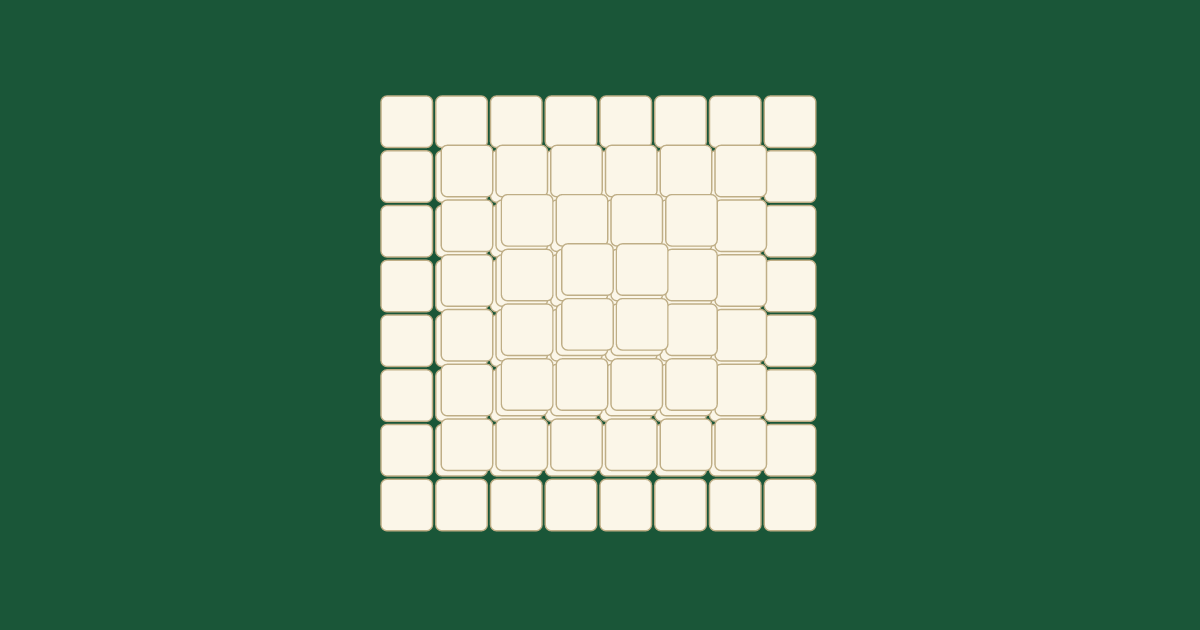
Play Pyramid Mahjong Solitaire free — instant in your browser, no download, no account needed. Pyramid Mahjong Solitaire takes the full set of 144 tiles and builds them upward into a tapering tower that shrinks layer by layer until it ends in a single tile at the very top. From the side it reads exactly like its name suggests: a broad square footing, then a slightly smaller square stacked on it, then smaller again, and so on, climbing to a lone capstone that crowns the whole structure. Unlike the long, sprawling figures that spread tiles flat across the screen, a pyramid concentrates everything into one dense, vertical heap, so the action stays in a tight central column where every tile you remove changes what you can reach next.
Players keep coming back to the pyramid because the shape itself sets the puzzle. The peak is the one place you are guaranteed a free move, and everything worth having is buried under it. You cannot rush the base, you cannot pick at the edges and hope the middle solves itself, you have to dismantle the tower from the top down and trust that the layers underneath will reward patient, even work. That mix of a clean, recognizable silhouette and a genuinely strategic teardown is why the pyramid is a staple of nearly every Mahjong collection, and why this hub gathers so many variations of it under one roof, from the compact starter board to towering giants twice the height.
In Mahjong Solitaire the goal never changes: match identical tiles in pairs and clear the entire board. A tile is playable only when it is free, meaning nothing is stacked on top of it and at least one of its left or right edges is open so you can slide it out. The arrangement of the 144 tiles is what makes one layout different from another, and the pyramid arrangement is among the most structured of them all. Each level is a solid square smaller than the one beneath it, centered so the slopes recede evenly on all four sides.
Because the tiers are concentric squares, the four sloped faces are entirely made of tile edges that step inward as you climb. That has a practical consequence at the table. The tiles you can see most clearly, the ones running up the outer staircase of each face, are often the easiest to free, while the genuinely stubborn tiles are the ones tucked directly under the higher squares in the heart of the tower. A pyramid is essentially a puzzle about exposure: most pairs are hidden, and your job is to convert hidden tiles into visible, removable ones in the right order.
Every Pyramid board on this hub is generated to be fully solvable. There is always at least one complete sequence of legal moves that clears all 72 pairs, so when a board feels stuck the path is still there, waiting on a tile you have not freed yet rather than missing entirely. If you do paint yourself into a corner, the Shuffle button re-deals the remaining tiles into a fresh arrangement that is again guaranteed solvable, so a careless match early on never permanently dooms a game.
The single most reliable rule for a pyramid is to clear the apex first. The capstone and the tiles immediately below it sit on top of the largest number of other tiles, so removing them frees the widest swath of the layer underneath in one stroke. Picking away at the base while leaving the summit intact is the classic beginner mistake, it nibbles a few easy pairs and then leaves you staring at a locked mountain with no free tiles left in the center.
Work down symmetrically. Because the four slopes are mirror images, it is tempting to strip one face clean because the matches there are obvious, but doing that unbalances the tower. Tiles deep on the opposite slope stay pinned, and you can reach a point where one side is gone and the other is a solid, immovable wall. Treat the pyramid like you are sanding it down evenly, take a tile from one face, then balance it with progress on another, so all four slopes descend together and no single side strands its neighbors.
Watch the four corners of the base. They are usually the last tiles to come free because each one is held down by the entire stack of squares rising above it and is boxed in on its inner edges by the rest of the bottom layer. When you have a choice between two equally good matches, favor the one that chips toward a corner rather than away from it, and try to keep corner tiles from being your only remaining copy of a value. A pyramid that goes wrong almost always goes wrong at the base, with two identical corner tiles trapped diagonally across from each other.
Think one layer ahead, not one tile ahead. Before you take an easy pair off the top, glance at what it is sitting on. If removing those two tiles exposes a tile you will desperately want later, that is a great move. If it just deepens a hole without opening anything useful, look for a match that does more work. Reading the layers, not just the surface, is the whole skill, and it is exactly what the generated solvable boards reward.
A few smaller habits keep a teardown smooth. When three of a value are showing and the fourth is buried, hold off pairing the visible three until the buried one is close to free, otherwise you can clear all the easy copies and then find the last pair sealed deep in the tower. Prefer matches that open a tile rather than ones that only bury further, and when two faces both offer the same pair, take whichever copy is doing more to balance the slopes. None of this requires counting tiles like a memory game, it is just a matter of pausing for a second to ask what each removal actually unlocks before you commit to it.
This hub aggregates a whole family of pyramid boards rather than a single layout, and they span a wide range of sizes and feels. At the approachable end sits the classic Pyramid, a clean tapering tower that teaches the top-down rhythm without overwhelming you. From there the footprint and height grow: Grand Pyramid and Mega Pyramid push the structure taller and broader, stacking more tiers so the central column runs deeper and the teardown takes noticeably longer.
Many entries are sequenced variations that let you settle into a shape and then tackle fresh arrangements of it. Cobalt Pyramid, Cobalt Pyramid II, and Cobalt Pyramid III form one such run, as do Velvet Pyramid, Velvet Pyramid II, and Velvet Pyramid III. Each numbered board keeps the family silhouette but reshuffles where the hard tiles hide, so once you have learned to read a Velvet or Cobalt tower, the sequels reward that familiarity while still posing a new puzzle every time.
Other boards lean into distinct moods and twists on the form. Onyx Pyramid and Coral Pyramid trade on rich, contrasting palettes, while Verdant Pyramid carries a fresh, green-toned theme. Twin Pyramid splits the idea into a paired structure so you are managing two peaks at once instead of one, which changes the rhythm of where free moves appear. Dragon Pyramid, Mystic Pyramid, Spring Pyramid, and Velvet Pyramid round out the set with their own atmospheres, giving the same dependable mechanics a different character each session.
The pyramid is a near-universal symbol of something built up tier by tier to a single point, and that resonance is part of why the layout feels so natural in Mahjong. There is a quiet pleasure in watching a tall, imposing tower shrink under your hands until only a flat footprint remains and then nothing at all. The shape gives every game a clear arc, a beginning at the summit, a middle as the slopes recede, and a satisfying finish as the last corners of the base finally let go.
The 144 tiles themselves carry the traditional Mahjong artwork that makes the matching engaging in the first place. You are pairing the three numbered suits, Circles, Bamboo, and Characters, each running one through nine, along with the Wind tiles for the four directions and the Dragon tiles in red, green, and white. Layered over a steep pyramid, those familiar faces climb the staircase of each slope, and spotting a matching pair across the tower, then realizing you can actually reach both, is the small recurring reward that keeps a session going.
Two special groups follow Mahjong's usual relaxed rule, and they sit naturally in a pyramid because the peak is where wild matches help most. The four Flower tiles match any other Flower, and the four Season tiles match any other Season, so you never need two copies of the very same flower or season to clear them. On these boards the flowers and seasons are always genuine flowers and seasons, so when you see two of either you can pair them freely, which is a welcome bit of flexibility when they turn up high on the tower blocking a tier below.
Difficulty across the hub scales mostly with height and width. The standard Pyramid is friendly enough for a newcomer or for anyone who just wants a calm, unhurried round, the structure is legible and the path opens up readily once you commit to clearing the top. The larger towers, like Mega Pyramid and Grand Pyramid, ask for more patience and more layer-reading, because a deeper central column means more tiles are hidden at any moment and a single greedy match has further-reaching consequences.
The vertical, concentrated nature of a pyramid makes it slightly less forgiving than a flat, spread-out figure where many tiles are exposed from the start. Here, exposure is something you earn. That is exactly what experienced players enjoy about it, the board pushes back, and a clean solve feels deserved. Newer players can lean on the guarantees to learn the form, every board can be finished, and Shuffle is always there to rescue a stuck position without ending the game.
These boards suit relaxed, thoughtful play more than frantic clicking. There is no clock forcing your hand and no level you must beat to move on, so you are free to study the tower, take the match that opens the most, and enjoy the deliberate teardown. If you like the meditative side of Mahjong, the steady peeling of a pyramid is about as soothing as the genre gets, and if you want a sterner test, the giant variants are waiting whenever the classic feels too gentle.
A good way to grow with the collection is to start on the standard Pyramid until the top-down rhythm becomes second nature, then step up to a numbered run like the Cobalt or Velvet sequels to practice the same instincts on fresh arrangements, and finally take on Mega Pyramid or Grand Pyramid once the deeper towers stop feeling intimidating. Because nothing is locked behind progress and every board stands on its own, you can also just open whichever shape or palette appeals to you on a given day and play a single satisfying round, no streak to protect and no penalty for putting it down.
Yes. Every Pyramid board in this hub is generated so that a complete winning sequence exists, clearing all 72 pairs from apex to base. If a game feels stuck, the remaining path depends on a tile you have not freed yet rather than being impossible, so re-reading the layers from the top usually reveals the move you missed.
Start at the very top. The capstone and the tiles just under it sit on the largest stack, so removing them frees the most tiles on the layer below. Clearing the peak first, then working down each of the four slopes evenly, is far more reliable than picking easy pairs off the base and leaving the summit locked.
Shuffle re-deals the tiles you have left into a brand-new arrangement that is again guaranteed solvable. It does not just nudge a couple of tiles, it rebuilds the remaining board into a fresh, winnable position, so an early careless match never permanently traps you and you can always play a game through to the finish.
They use Mahjong's standard relaxed rule. Any Flower tile pairs with any other Flower, and any Season tile pairs with any other Season, so you do not need an exact duplicate to remove them. On every Pyramid board the flowers and seasons are real flowers and seasons, which makes them handy for clearing wild matches high on the tower that would otherwise block a tier underneath.
Master · 122 tiles
Master · 120 tiles
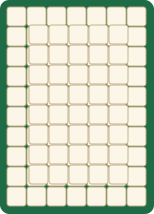
Expert · 110 tiles
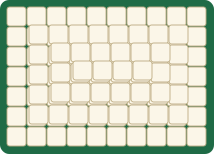
Master · 132 tiles
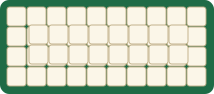
Medium · 56 tiles
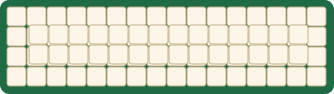
Hard · 92 tiles
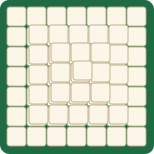
Expert · 84 tiles
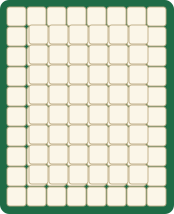
Expert · 128 tiles
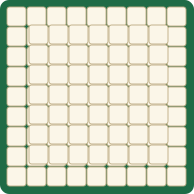
Expert · 130 tiles
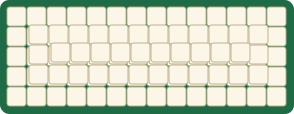
Expert · 116 tiles
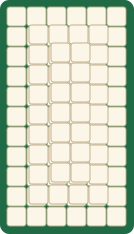
Expert · 116 tiles
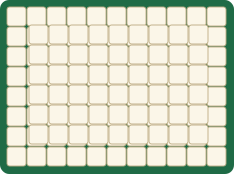
Master · 142 tiles
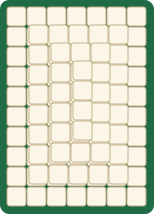
Master · 132 tiles
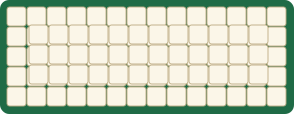
Expert · 106 tiles
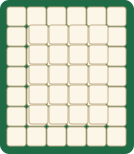
Hard · 62 tiles
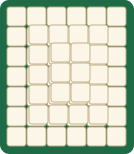
Hard · 68 tiles
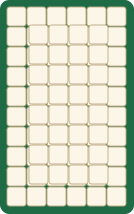
Hard · 92 tiles
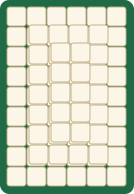
Expert · 92 tiles
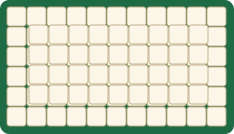
Expert · 102 tiles
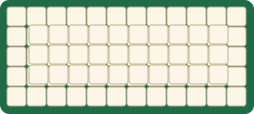
Hard · 90 tiles
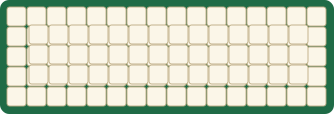
Expert · 122 tiles
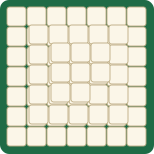
Hard · 82 tiles
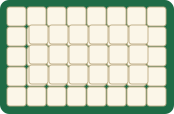
Medium · 58 tiles
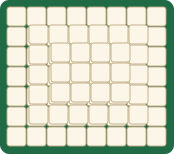
Expert · 98 tiles
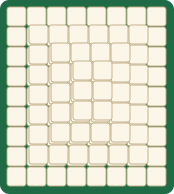
Master · 140 tiles
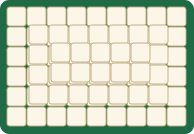
Expert · 92 tiles
Expert · 104 tiles
Hard · 68 tiles
Expert · 106 tiles
Expert · 122 tiles
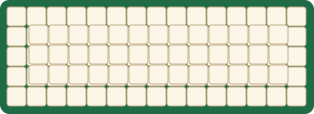
Expert · 114 tiles
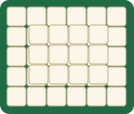
Medium · 42 tiles
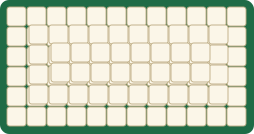
Master · 128 tiles
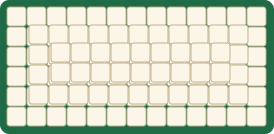
Master · 140 tiles
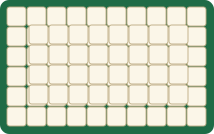
Hard · 92 tiles
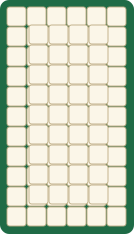
Expert · 102 tiles
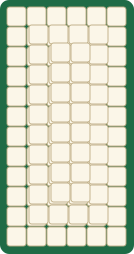
Master · 128 tiles
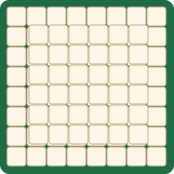
Expert · 100 tiles
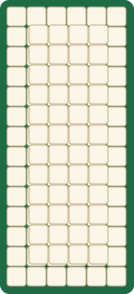
Expert · 132 tiles
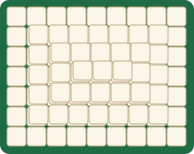
Master · 116 tiles
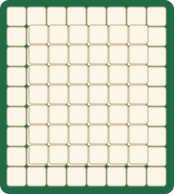
Expert · 114 tiles
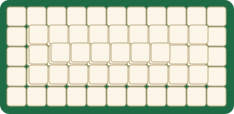
Expert · 88 tiles
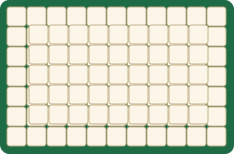
Expert · 122 tiles
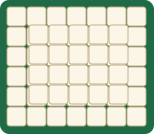
Hard · 62 tiles
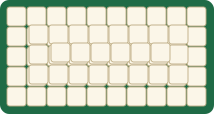
Hard · 80 tiles
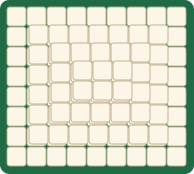
Master · 140 tiles
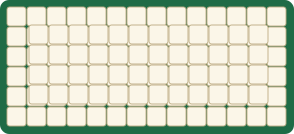
Expert · 132 tiles
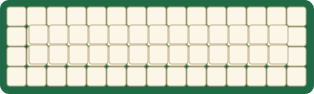
Hard · 86 tiles
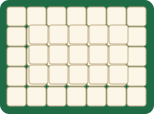
Medium · 50 tiles
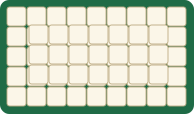
Hard · 66 tiles
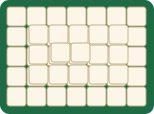
Hard · 52 tiles
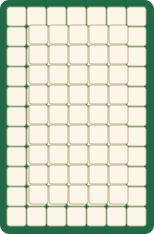
Expert · 122 tiles
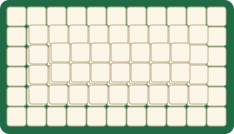
Expert · 116 tiles
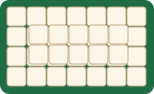
Medium · 38 tiles
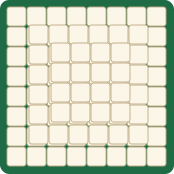
Expert · 116 tiles
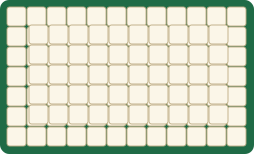
Expert · 134 tiles
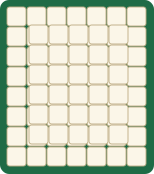
Hard · 86 tiles
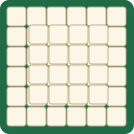
Medium · 52 tiles
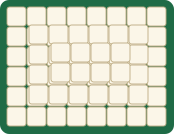
Hard · 80 tiles
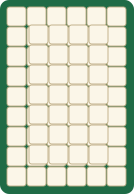
Hard · 82 tiles
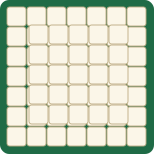
Hard · 74 tiles
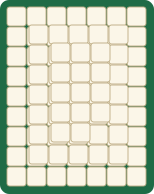
Expert · 112 tiles
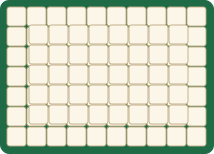
Expert · 110 tiles
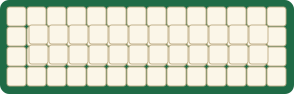
Hard · 80 tiles
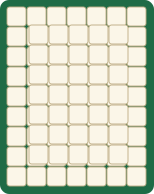
Expert · 98 tiles
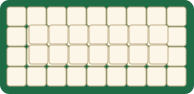
Medium · 50 tiles
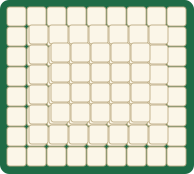
Master · 134 tiles
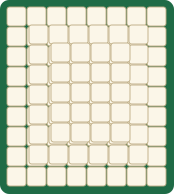
Master · 134 tiles
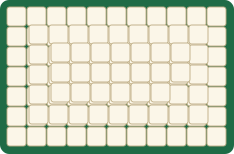
Master · 142 tiles
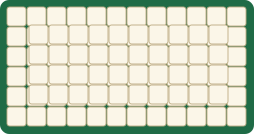
Expert · 112 tiles
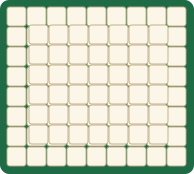
Expert · 114 tiles
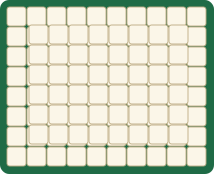
Expert · 128 tiles
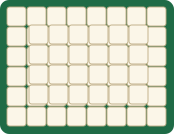
Hard · 72 tiles
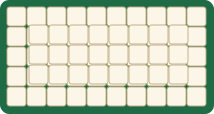
Hard · 74 tiles
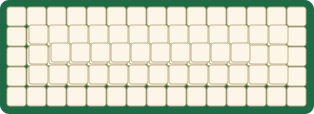
Master · 124 tiles
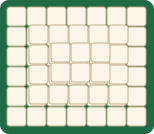
Hard · 68 tiles
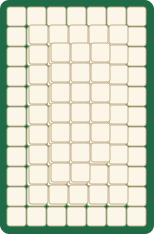
Master · 142 tiles
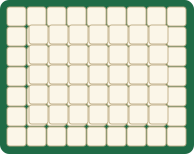
Expert · 98 tiles
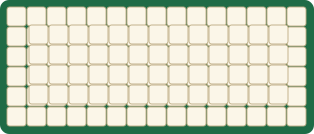
Master · 142 tiles
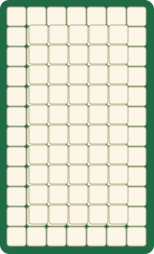
Expert · 134 tiles
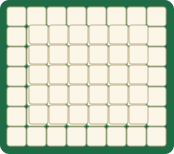
Hard · 86 tiles
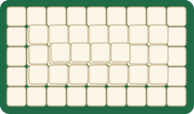
Hard · 70 tiles
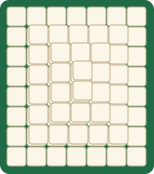
Expert · 100 tiles
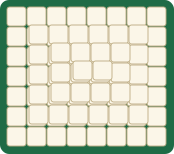
Expert · 100 tiles
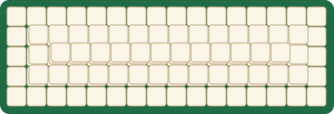
Master · 134 tiles
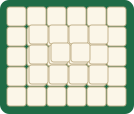
Medium · 44 tiles
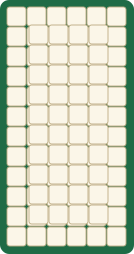
Expert · 112 tiles
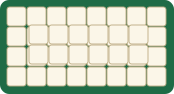
Medium · 44 tiles
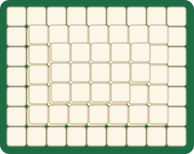
Expert · 112 tiles
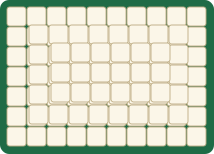
Master · 128 tiles
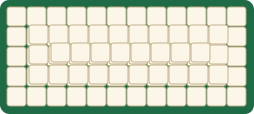
Expert · 98 tiles
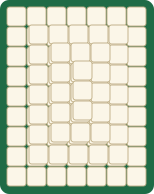
Master · 116 tiles
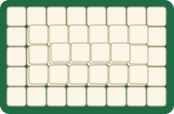
Hard · 62 tiles
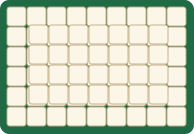
Hard · 82 tiles
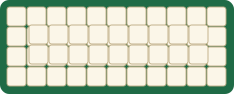
Hard · 62 tiles
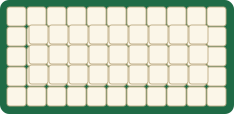
Hard · 82 tiles
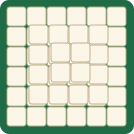
Hard · 56 tiles
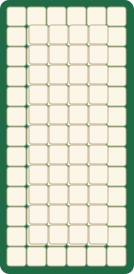
Expert · 122 tiles
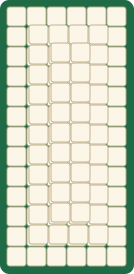
Master · 140 tiles
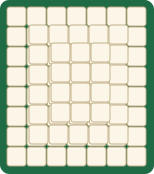
Expert · 98 tiles
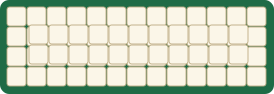
Hard · 74 tiles
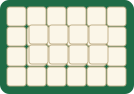
Medium · 32 tiles
Hard · 72 tiles
Hard · 80 tiles
Master · 128 tiles
Master · 142 tiles
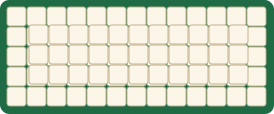
Expert · 98 tiles
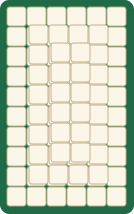
Expert · 104 tiles
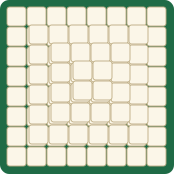
Master · 120 tiles
Tower Mahjong · Twin Towers Mahjong · Bridge Mahjong · Cross Mahjong · Diamond Mahjong · Fortress Mahjong · Zodiac Mahjong · Animal Mahjong · Object Mahjong · Food Mahjong · Holiday Mahjong · Symbol Mahjong · Nature Mahjong · Geometric Mahjong · Easy Mahjong Solitaire · Hard Mahjong Solitaire · Christmas Mahjong · Ocean Mahjong
From the same team — more games, free to play online.