Object Mahjong
49 boards · free, no download.
49 boards · free, no download.
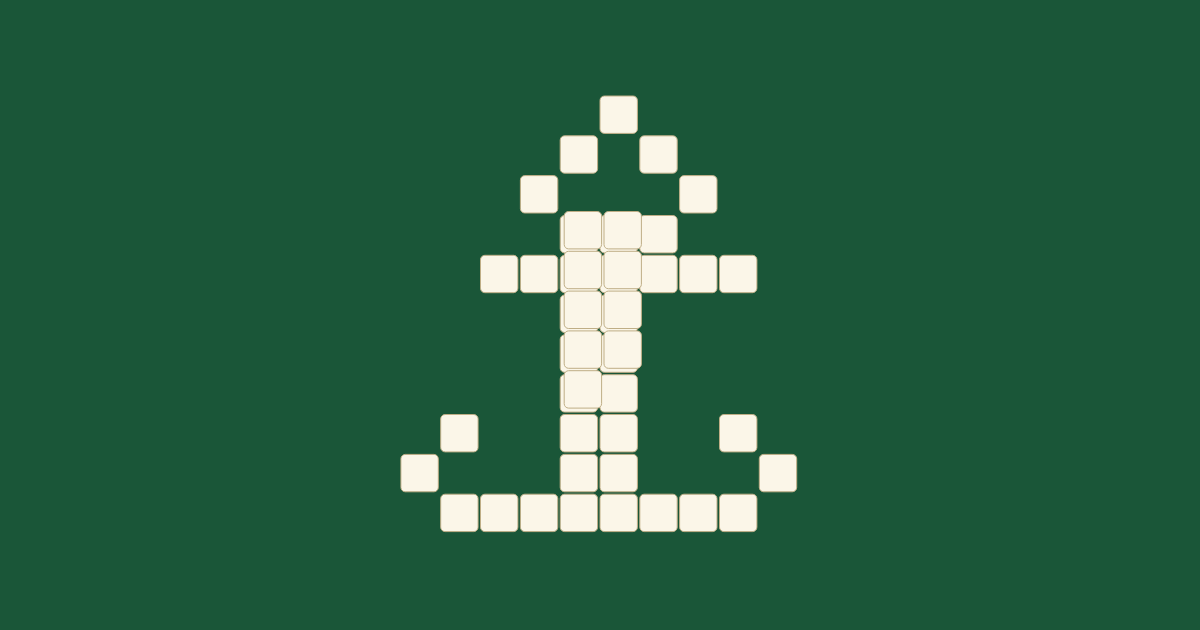
Play Object Mahjong free online — instant in your browser, no download required. Object Mahjong is the corner of Mahjong Solitaire where the tiles stop pretending to be an abstract pyramid and start drawing pictures. Instead of the classic turtle mound, every board here is stacked into the silhouette of something you would recognize from a kitchen drawer, a toolbox, a harbor, or a launch pad. An anchor, a sailing boat, a teapot, a light bulb, a padlock, a pair of scissors, a battery still holding its charge. The rules never change from standard Mahjong Solitaire: clear the board by removing matching pairs of free tiles until none are left. What changes is the shape underneath your hands, and the shape changes everything about how the game feels and how you should play it.
These boards are a favorite for relaxed players, and for good reason. A picture you can name is easier to read than a featureless slab, so your eye knows where to look before your brain has finished waking up. The handle of a teacup, the neck of a guitar, the stem of a light bulb, the flukes of an anchor all hang off the main body and tend to come apart first, which gives you an obvious and satisfying place to begin. Working a familiar object down to nothing, watching a bell or a rocket dissolve tile by tile until the table is bare, turns a quick matching puzzle into a small, low-stakes pleasure you can repeat as many times as you like. Every board in this hub is fully solvable, so there is always a way through, and the only thing you are really racing is your own sense of calm.
Object Mahjong is not a different game with different rules. It is standard Mahjong Solitaire dressed in a representational layout. You still have a stack of 144 tiles (or whatever the specific board uses), still match identical pairs, and still need a tile to be free before you can take it. A tile is free when nothing sits on top of it and at least one of its left or right long edges is open, so you can slide it out sideways. Flowers match any other flower and seasons match any other season, exactly as in the classic game. The objects part is purely the architecture of the pile.
The defining trait of this category is that the outline means something. A traditional turtle is symmetrical and roughly blob shaped, so there is no obvious entry point and you read it as raw geometry. An object board has features. A guitar has a thin neck and a fat body. A key has a long shaft and a toothed bit. An umbrella has a curved canopy and a slender handle. Those features are not decoration only; they tell you where the layout is loose and where it is dense, because thin parts are usually one tile wide and therefore mostly free, while the bulky body is where the tiles are stacked two and three high.
Because the shapes are recognizable, this hub is unusually friendly to newcomers and to anyone who just wants something pleasant rather than punishing. You do not need to memorize a layout to know roughly how it will behave. You can look at a padlock and guess, correctly, that the shackle loop on top will open up before the solid block of the body. That readability is the whole appeal, and it is what separates Object Mahjong from the more abstract dragon, pyramid, and fortress layouts.
The single most useful habit in Object Mahjong is to start at the thin parts and finish in the thick parts. Handles, necks, stems, shafts, flukes, masts, and spouts are the appendages that stick out from the main mass. They are typically a single tile deep, which means many of their tiles are free from the opening move, and removing them does not unlock anything underneath because there is usually nothing underneath. Clear an umbrella handle, a teapot spout, a light bulb stem, a rocket nose, a key shaft early. It thins the board, it builds momentum, and it rarely costs you anything.
The bulky body is where you have to think. On a vase, an anchor, a bell, or a padlock, the center is stacked high and tiles trap one another. The discipline there is the same discipline that wins any Mahjong Solitaire game: do not grab a pair just because it is available. Before you remove a matched pair, ask what it frees and what it strands. If two identical tiles are both buried in the body and a third and fourth copy sit out on a handle, take the handle copies and keep the buried pair as a key that will open the body later. Matching all four of a kind too early is the classic way to bury yourself, because the tiles you needed to break a logjam are suddenly gone.
Read the board in layers, not in pieces. The top layer of a board like the sailing boat (the sail and rigging) sits over the hull, so peeling the sail reveals the hull beneath it. Try to keep both halves of the board moving at a similar pace so you do not strip one side bare while the other stays locked solid. When you genuinely cannot find a productive pair, that is what the Shuffle button is for. A shuffle re-deals the remaining tiles into a fresh arrangement that is still solvable, so it is a legitimate tool for getting unstuck rather than an admission of defeat. Use a Hint when you only need a nudge, and use Undo to walk back a move you regret. These boards reward patience far more than speed.
The variety in this hub is the point, because each silhouette plays like its own small puzzle. The nautical boards are a cluster of their own: the Anchor, with its ring up top, its straight shank, and the curved arms and flukes at the bottom that come apart in pairs; and the Sailing Boat, where a tall triangular sail of single-depth tiles sits above a denser hull, so you peel the rig and then work the deck. These tend to feel open and breezy because so much of the shape is one tile thick.
Then there are the household objects, which usually pair a delicate appendage with a solid core. The Vase has a flared lip and a narrow neck above a rounded belly. The Tea Cup gives you a loop of a handle that empties quickly while the bowl holds the bulk of the tiles. The Bell has a rounded crown and a wider flared rim, with a small loop at the very top to start on. The Umbrella splits cleanly into a stretched canopy and a thin handle. The Light Bulb is almost a tutorial in this category: skinny screw base and stem first, glass bulb last.
A whole family of these boards are keys and the things keys interact with. The Skeleton Key and the plain Key both run a long thin shaft that frees up fast into a toothed or ornate bit at one end and a bow or loop at the other, so they are excellent boards to practice the thin-first habit on. The Padlock pairs a U-shaped shackle (an open loop that unlocks early) with a chunky rectangular body. Round out the set with the tools and gadgets: the Scissors, two crossed blades and a pair of finger loops that come apart symmetrically; the Hammer, a slim handle leading to a heavy concentrated head; the Rocket, a pointed nose and tail fins around a tubular fuselage; the Ladder, a regular grid of rungs that is unusually even in depth; and the Magnet, the Battery, the Vase, and more horseshoe and bar shapes that each pull tiles apart in their own direction. Dozens of these objects live in the hub, and no two ask exactly the same thing of you.
The reason these boards land so well is older than computer games. Long before screens, players arranged Mahjong tiles into pictures for festivals and family games, building dragons, flowers, characters, and lucky symbols out of the pieces simply because the tiles invite it. Western solitaire versions inherited the turtle as the default, but designers quickly realized the tile set is really a box of little building blocks, and that you can stack it into almost any outline you can draw. Object boards are the natural, playful end of that idea: if you can sketch a teapot in a grid, you can build a teapot you can take apart.
There is a small spark of recognition every time a new object board loads, the same pleasant click you get from spotting a shape in the clouds. Naming the thing on the table, a guitar, a clock, a camera, a key, makes the board feel personal and concrete in a way an abstract mound never does. It also makes progress legible. You are not just clearing tiles; you are dismantling a recognizable object, and that gives a clear arc to a session. The handle goes, the body shrinks, the last few tiles vanish, and the picture is gone. That tidy beginning, middle, and end is quietly satisfying in a way that keeps people coming back to one more board.
The shapes also keep the classic game from going stale. If you have cleared a hundred turtles, the geometry stops surprising you. Switching to an anchor, then a bell, then a pair of scissors forces your eye to relearn where the loose tiles and the choke points are every single time. The underlying skill carries over, but the read is fresh, so a familiar game stays interesting far longer than it otherwise would.
As a category, Object Mahjong sits comfortably in the easy-to-moderate range, which is exactly why it suits relaxed and older players so well. The recognizable outlines do a lot of the navigation for you, and the long thin appendages give every board a gentle on-ramp where the first several moves are nearly free. You are rarely staring at a wall wondering where to even begin. For a casual afternoon, a coffee break, or winding down in the evening, these are some of the most forgiving and most welcoming boards on the site.
That said, the difficulty genuinely varies from object to object, and the variation is worth seeking out. The flatter, single-depth shapes (the Ladder, much of the Sailing Boat sail, the long Key shafts) play quickly and forgivingly because few tiles trap others. The compact, deeply stacked shapes (a full Vase belly, an Anchor crown, a Padlock body, a Hammer head) concentrate the tiles into a small footprint and demand more careful ordering, since one wrong early match can strand a pair in the middle. So even within an easygoing hub you can dial the challenge up or down just by choosing a different object.
Newcomers should start on a Light Bulb, a Key, or an Umbrella to learn the thin-first instinct, then graduate to a Bell or a Padlock once that habit sticks. Experienced players who normally chase the hardest fortress and dragon layouts will still enjoy these as palate cleansers, and can self-impose challenge by playing for speed or for the fewest shuffles. Whoever you are, the safety net is the same: every board is solvable, the Shuffle re-deals into another solvable arrangement, and Undo and Hint are there when you want them. The promise of this hub is that you can always finish, so you are free to relax and just enjoy taking the object apart.
Yes. Every board in the Object Mahjong hub is generated to be fully solvable from the starting deal, so there is always at least one sequence of matches that clears the whole picture. If you do reach a dead end because of the order you removed tiles, that is a consequence of your moves rather than a flaw in the board. Use Undo to step back, or press Shuffle to re-deal the remaining tiles into a fresh arrangement that is also guaranteed solvable.
Start at the thin parts. The appendages that stick out from the main shape, the anchor's shank and ring, the teapot's spout and handle, the key's long shaft, are usually one tile deep, so many of their tiles are free from the opening move and removing them rarely traps anything. Clearing those slim sections first thins the board and builds momentum. Save the bulky body, where tiles are stacked high and trap one another, for last, when you can see clearly what each remaining match will free.
Shuffle takes the tiles still left on the board and re-deals them into a brand new arrangement, and that new arrangement is always solvable. It is not cheating; it is a built-in tool for getting unstuck. If you cannot find a productive pair, or you suspect an early mistake has locked the board, a shuffle gives you a clean, winnable layout to continue from. Reaching for Shuffle less often is a nice personal challenge, but there is no penalty for using it whenever you want a fresh start.
Exactly as they do in classic Mahjong Solitaire. The flower tiles all match each other, and the season tiles all match each other, so you do not need two identical flowers or two identical seasons to make a pair, just any two flowers together or any two seasons together. On object boards these special tiles can sit anywhere in the design, including the thin appendages, and they are often a quick early pair to grab while you are opening up a handle, neck, or shaft.
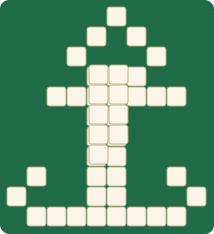
Medium · 46 tiles
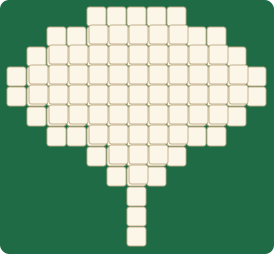
Medium · 136 tiles
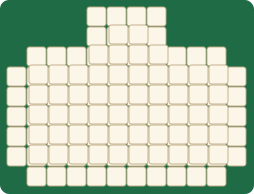
Medium · 144 tiles
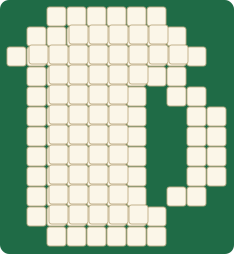
Medium · 140 tiles
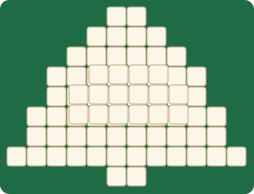
Hard · 78 tiles
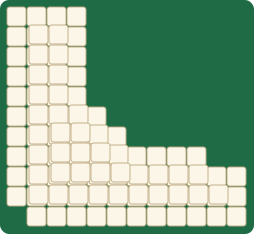
Medium · 124 tiles
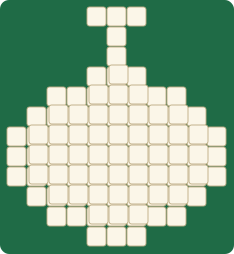
Medium · 124 tiles
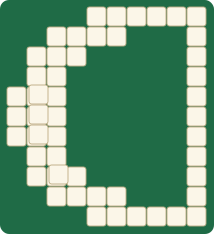
Hard · 52 tiles
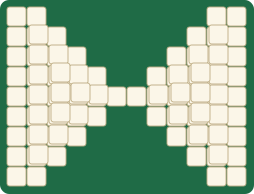
Medium · 108 tiles
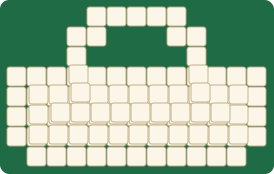
Medium · 120 tiles
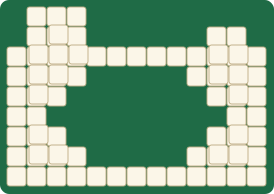
Hard · 84 tiles
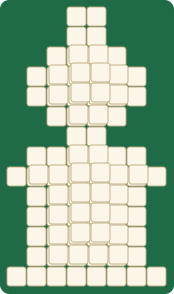
Medium · 120 tiles
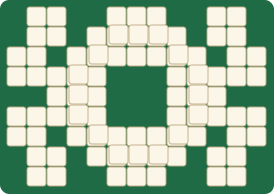
Hard · 96 tiles
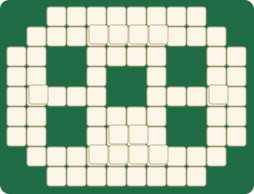
Medium · 88 tiles
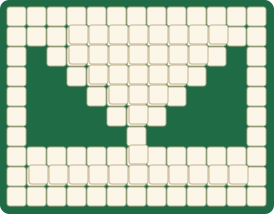
Medium · 136 tiles
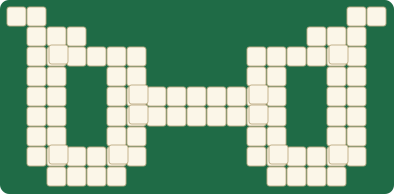
Hard · 94 tiles
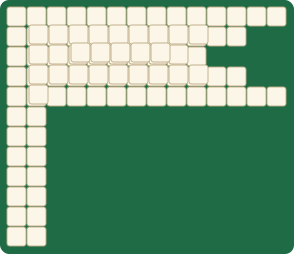
Medium · 108 tiles
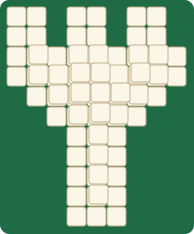
Medium · 88 tiles
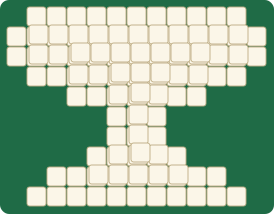
Hard · 140 tiles
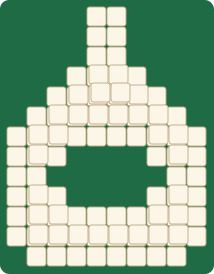
Hard · 112 tiles
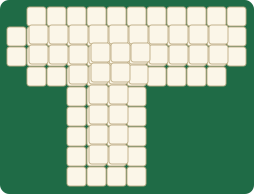
Medium · 102 tiles
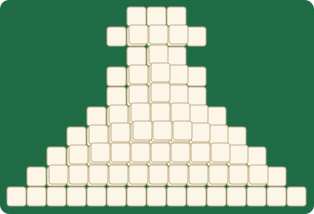
Medium · 138 tiles
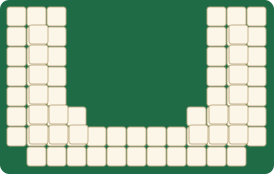
Medium · 80 tiles
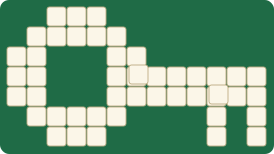
Medium · 46 tiles
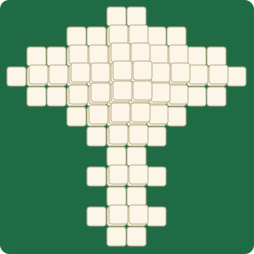
Medium · 116 tiles
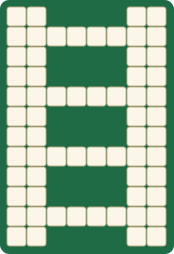
Medium · 64 tiles
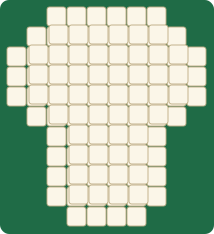
Medium · 132 tiles
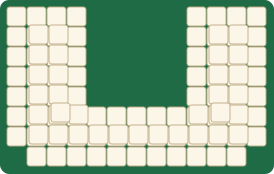
Medium · 112 tiles
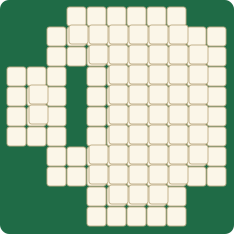
Medium · 140 tiles
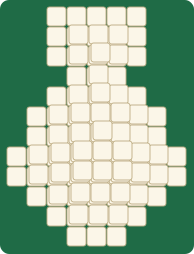
Medium · 140 tiles
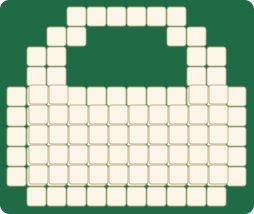
Medium · 132 tiles
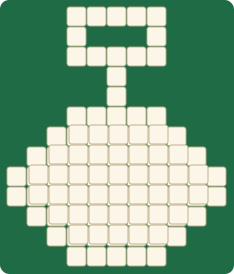
Medium · 120 tiles
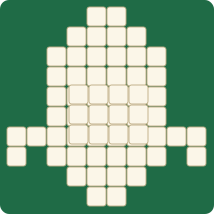
Hard · 66 tiles
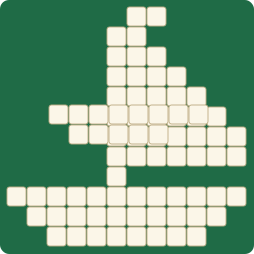
Hard · 80 tiles
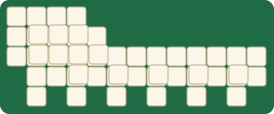
Medium · 52 tiles
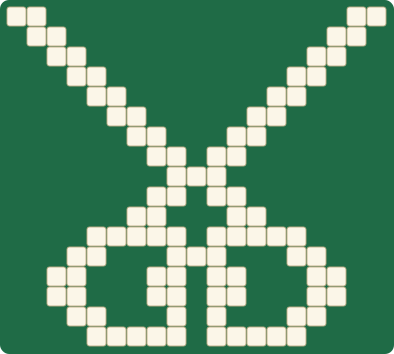
Hard · 92 tiles
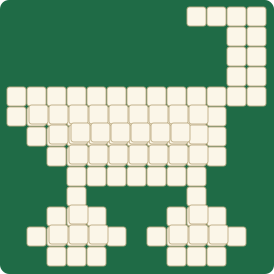
Hard · 122 tiles
Medium · 44 tiles
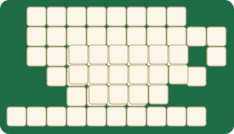
Hard · 64 tiles
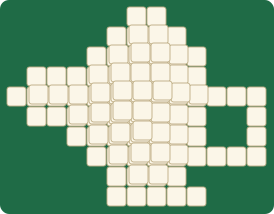
Hard · 132 tiles
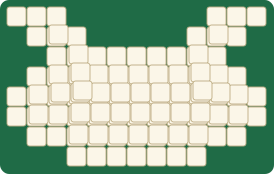
Hard · 138 tiles
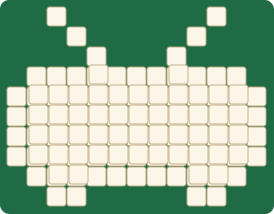
Hard · 134 tiles
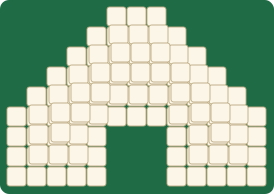
Medium · 140 tiles
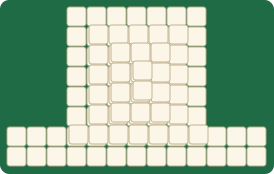
Medium · 114 tiles
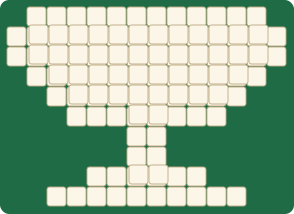
Medium · 136 tiles
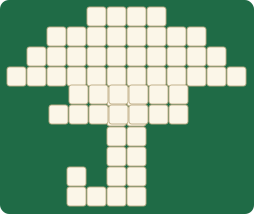
Hard · 62 tiles
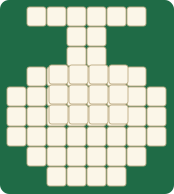
Hard · 62 tiles
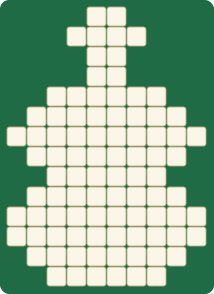
Hard · 90 tiles
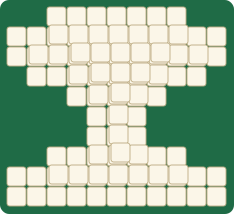
Medium · 124 tiles
Pyramid Mahjong Solitaire · Tower Mahjong · Twin Towers Mahjong · Bridge Mahjong · Cross Mahjong · Diamond Mahjong · Fortress Mahjong · Zodiac Mahjong · Animal Mahjong · Food Mahjong · Holiday Mahjong · Symbol Mahjong · Nature Mahjong · Geometric Mahjong · Easy Mahjong Solitaire · Hard Mahjong Solitaire · Christmas Mahjong · Ocean Mahjong
From the same team — more games, free to play online.